ON THIS PAGE
Apollo.io has a free plan and three paid tiers billed per seat: Basic at $49, Professional at $79 and Organization at $119 a month on annual billing, or $65, $99 and $149 billed monthly. Organization needs at least 3 seats. Every tier meters exports with credits, so an active seat usually costs more than the sticker.
Apollo.io's pricing page looks simple: four tidy tiers, a generous free plan, prices that seem reasonable next to enterprise sales tools. The invoice three months later rarely matches that first impression. Between per-credit exports, per-seat billing and features gated to higher tiers, the real cost of Apollo pricing is almost always higher than the sticker.
This guide breaks down exactly what Apollo costs in 2026: every plan, how the credit system quietly drives the bill up, the true annual cost for a solo user versus a team, the hidden fees nobody mentions, and whether it is worth it. At the end we cover a flat-rate alternative for teams that want the same core jobs done without the recurring cost.
Need a list for one campaign? Compare the Apollo scraper service or export Apollo leads to CSV with a one-off order from $29.
Apollo pricing at a glance
Here is the short version before we dig in. Apollo sells four tiers, meters most valuable actions with credits, and bills per user per month:
You can confirm the current numbers on the official Apollo.io pricing page, which changes periodically, and read unfiltered user sentiment about value on Apollo's G2 reviews. The recurring theme in those reviews is worth internalizing: great data, real frustration once the credits run out.

The 4 Apollo plans, decoded
Each tier is aimed at a different buyer. What actually changes between them is credits, seats and gated features.
Free plan
Real, but a demo rather than a workflow. You get 75 credits a month, limited sequences and heavy feature gating. Good for kicking the tires, not for running outbound. Most teams exhaust the useful parts within a week.
Basic ($49/user/mo yearly, $65 monthly)
2,500 credits per seat a month and core sequencing, but no advanced filters, limited analytics and capped API access. This is the tier where credit anxiety starts: an active rep exporting contacts daily will feel the ceiling.
Professional ($79/user/mo yearly, $99 monthly)
The tier most serious teams actually need. Uncapped sequences, better reporting and some buying-intent signals. It is also where the per-seat math starts to hurt: three reps here is $237-297 a month before any credit top-ups.
Organization ($119/user/mo yearly, $149 monthly, 3+ seats)
SSO, advanced security, more intent topics and higher limits. Priced for sales orgs with procurement budgets. If you are a founder or a small agency, this tier is rarely the right fit.
How Apollo credits really work
This is the part the pricing page underplays. Apollo meters the most valuable actions with credits: exporting an email costs a credit, revealing a mobile number costs several, and enriching records draws them down too. Every plan includes a monthly allowance, and active reps burn through it well before the month is over.
When you hit zero, you have two options: buy a credit top-up or upgrade a tier. Both increase the bill. This is how a $99/month seat quietly becomes a $250+/month line item in a heavy prospecting month. The sticker price is the floor, not the ceiling.
The real cost of Apollo by team size
Here is the honest math once credits and seats are included. Treat the sticker price as roughly40-60% of the real cost for an active seat.
These are recurring numbers. You pay them again next year, and the year after. That is the core tension with Apollo pricing: it scales linearly with both your team and your activity, so success (more prospecting) directly raises your bill.
Hidden costs to budget for
Beyond the plan and credits, three costs surprise new Apollo buyers:
- Mobile numbers. Direct dials are among the most credit-expensive actions. A phone-heavy team burns credits fastest here.
- Deliverability tooling elsewhere. Apollo is data-first; its sending and warm-up are not its strength. Serious senders add a dedicated tool, which is another subscription. Test your setup with a free deliverability test first.
- Verification drift. Even good databases decay. Teams often add a separate verifier to keep bounce rates safe, or accept higher bounces. A free email verifier helps spot-check, but bulk cleaning is another line item.
Add those up and the "one platform" promise quietly becomes two or three subscriptions, which is exactly the stacking problem that pushes teams toward all-in-one tools.
Is Apollo worth the price?
For the right buyer, yes. Apollo's database is genuinely strong, its filters are excellent, and the dialer plus intent data create a real phone-and-email motion that email-only tools cannot match. If you run a 5+ rep sales org that monetizes intent signals and phone outreach, the cost can pencil out.
For founders, freelancers and small agencies running email-led outbound, the value is harder to justify. You are paying enterprise per-seat, per-credit pricing for a fraction of the platform you actually use. That is the moment most teams start searching for an Apollo alternative.
“The database is great until the export credits run out mid-month. Then you are either upgrading or waiting. It adds up faster than the sticker price suggests.”
G2 reviewer · SDR
A cheaper Apollo alternative: Getlead
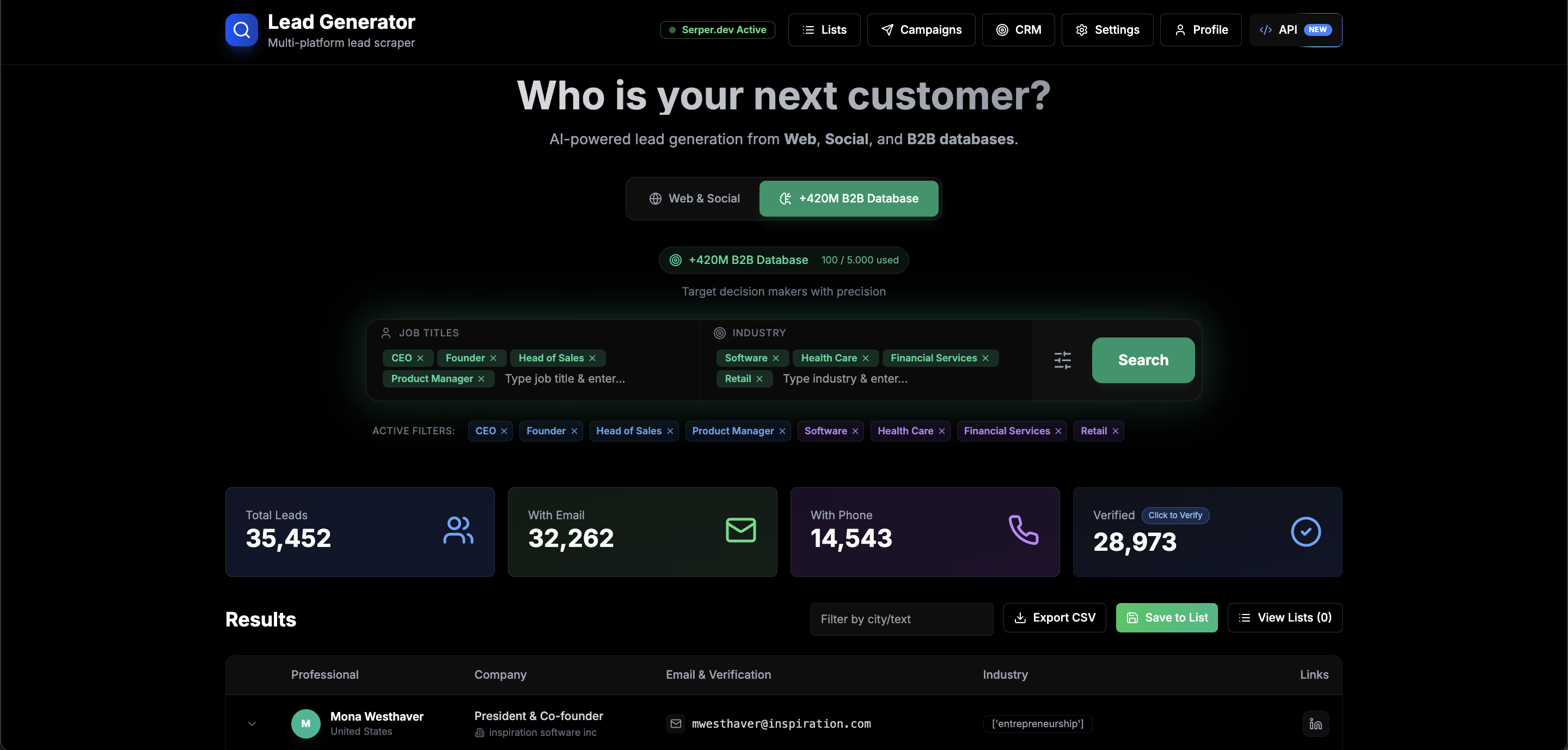
If the honest answer to your last Apollo invoice was "this is a lot for what we use," Getlead is built for exactly that. It covers the core Apollo workflow, find verified contacts, verify them and send, but flips the pricing model on its head.
Instead of per-seat, per-credit billing, Getlead is a flat subscription from $19.90 a month with flat monthly allowances: a 177M+ verified database, a lead scraper (50,000 scraped leads a month on Pro), built-in SMTP verification, cold email sending (300,000 a month on Pro) with warm-up, and a CRM. No credits, no seats, no add-on invoices.
Getlead does not replace Apollo for everyone. Apollo wins on intent data, mobile numbers and org charts. But for the money pages of outbound, finding, verifying and emailing, Getlead does the same job for a flat price that a single month of active Apollo often exceeds. The full breakdown is in our Getlead vs Apollo comparison.
Verdict: what Apollo really costs
Apollo's advertised pricing (free to ~$149/user/mo) is only the starting line. Factor in credits, seats and the add-ons its data-first design pushes you toward, and an active team routinely pays $3,000 to $12,000 a year. That is fair value for enterprise sales orgs that use the full platform, and poor value for email-led teams that use a slice of it.
Know which one you are before you commit. If you use the dialer and intent data daily, Apollo earns its price. If you mostly find contacts and send email, a flat-rate tool does the same job for a fraction of the cost, month after month.
Apollo pricing FAQ
How much does Apollo.io really cost per month?
Paid seats cost $49 to $119 a month billed yearly, or $65 to $149 billed monthly. With export credits and top-ups an active seat realistically costs $100 to $250+ a month. Multiply the sticker price by roughly 2 to 2.5x for a realistic budget.
Does Apollo have a free plan?
Yes, with 75 credits a month and gated features. It is enough to test data quality, not to run ongoing outbound.
Why does my Apollo bill keep going up?
Credits. Exporting emails and revealing mobile numbers draws down a monthly allowance; when it runs out you buy top-ups or upgrade a tier. Heavier prospecting directly increases the bill.
Is Apollo worth it for a small team?
For phone-plus-email sales teams that use intent data, often yes. For small email-led teams, the per-seat per-credit model is expensive relative to what you use, and a flat-rate Apollo alternative usually delivers better value.
What is the cheapest way to get Apollo-style data?
A flat-rate tool like Getlead (from $19.90 a month) includes a 177M+ verified database with no export credits, plus verification and sending. One predictable bill, versus Apollo's per-seat price plus the credit packs an active team keeps buying.