ON THIS PAGE
By Marcus Holloway, Head of Growth at GetleadReviewed for accuracy. Last updated July 2026.
Your sales team just spent a week building a prospect list. They launch a campaign, and the results are disastrous: a 25% bounce rate, angry replies from irrelevant contacts, and a pipeline that's bone dry. This isn't a team failure; it's a data failure. The quality of your outreach is directly tied to the quality of your data, and in 2026, relying on outdated, inaccurate contact information is the fastest way to burn your budget and your domain reputation.
The market for B2B data providers is crowded and confusing. You have enterprise giants charging five figures for annual contracts, mid-tier players with complex credit systems, and a sea of smaller tools with questionable data sources. How do you choose the right partner without signing a contract you'll regret in three months? It comes down to understanding your specific needs, verifying data accuracy, and finding a pricing model that scales with your growth, not against it.
This guide cuts through the noise. We've gone deep on the top players, from the legacy platforms to the disruptive newcomers. We'll compare their databases, accuracy claims, feature sets, and, most importantly, their true cost. Whether you're a startup looking for your first 1,000 leads or a scale-up building a global sales machine, you'll find the insights needed to pick the best B2B contact database provider for your team.
How We Evaluated the Best B2B Data Providers of 2026
To create a genuinely useful B2B data providers list, we couldn't just rely on marketing claims. Our team at Getlead conducted a hands-on evaluation of over 20 different platforms throughout 2026. We signed up for trials, paid for starter plans, and ran identical tests across each provider to measure real-world performance.
Key Evaluation Criteria
- Data Accuracy & Freshness: What percentage of emails were valid? How often is the database updated?
- Database Size & Coverage: How many contacts and companies are in the database? Is their coverage strong in our target regions (e.g., B2B data providers in USA, Europe, UK)?
- Pricing & ROI: Is it a recurring subscription or a one-time cost? What is the true cost per valid lead?
- Features & Integrations: Does it offer more than just data? Does it include enrichment, a dialer, or a cold email tool?
- Ease of Use: How intuitive is the platform for a new sales rep to learn and use effectively?
The B2B data landscape of 2026 is fundamentally different, driven by AI-powered verification and a global push for data privacy. Our evaluation methodology has evolved to reflect this new reality. We moved beyond simple database size comparisons to a multi-faceted analysis focusing on data quality, ethical sourcing, and platform intelligence. This rigorous process ensures that our recommendations can withstand the demands of a modern, compliance-conscious sales and marketing team looking to achieve scalable growth.
Data accuracy and freshness were our primary criteria. We conducted sample tests on each platform, cross-referencing contact information against public records and our own proprietary data. We specifically measured email bounce rates and mobile connect rates from our test campaigns. Providers that leverage real-time verification APIs and demonstrate a data decay mitigation strategy scored highest. In today's market, a 95% accuracy guarantee is the benchmark for top-tier providers, anything less introduces significant waste into your outreach efforts.
Next, we scrutinized compliance and ethical sourcing. With regulations like GDPR and the new American Data Privacy and Protection Act (ADPPA) in full effect, this is non-negotiable. We interviewed providers about their data collection methods, demanding transparency on how they obtain and verify consent. Platforms that prioritize publicly sourced information and offer robust, user-friendly tools for managing data suppression and deletion requests were rated favorably. A provider's commitment to compliance is a direct reflection of their long-term viability.
We placed a heavy emphasis on the depth and quality of advanced data types, particularly technographics and intent data. It's no longer enough to know a company's size and industry. Top platforms must provide insight into a prospect's current tech stack and, more importantly, signals that they are actively researching a solution. We evaluated the granularity of this data and its recency, as stale intent signals can lead to poorly timed and irrelevant outreach.
Seamless integration capabilities are critical for operational efficiency. A great database is useless if it creates data silos. We assessed the robustness of each provider's API and the breadth of their native integrations with leading CRMs like Salesforce and HubSpot, as well as modern sales engagement platforms. The goal is a frictionless flow of information, enabling automated enrichment and streamlined workflows that save your sales team valuable time.
The user experience (UX) and overall platform usability were also key factors. We evaluated how intuitive it was to perform core tasks like building targeted lists, applying complex filters, and exporting data. A cluttered or confusing interface can be a major barrier to adoption, negating the value of even the best data. Platforms with clean design, fast search functionality, and helpful in-app guidance provide a much higher return on investment.
Finally, we considered the quality of customer support and onboarding. The best data providers act as strategic partners, not just software vendors. We evaluated their onboarding process, the availability of training resources, and the responsiveness of their support teams. Providers offering dedicated account managers and proactive strategy sessions demonstrated a clear commitment to customer success, which is crucial for maximizing the value of your data investment over time.
- Data Accuracy & Freshness: Email verification rates, mobile connect rates, and frequency of database updates.
- Compliance & Sourcing: Adherence to GDPR, ADPPA, and other global regulations; transparency in data collection methods.
- Data Depth & Breadth: Availability of technographics, intent data, firmographics, and direct contact information.
- Platform Usability & UX: Ease of list building, segmentation, and navigation within the platform.
- Integrations & API: Quality of native CRM integrations and robustness of the API for custom workflows.
- Customer Support & ROI: Quality of onboarding, ongoing support, and clear value demonstrated for the price.
At a Glance: The Top B2B Data Providers in 2026
Here's a quick breakdown of the best B2B data providers we tested. While enterprise solutions have their place, we found that all-in-one platforms with transparent pricing offer the best value for most growing businesses.
A side-by-side comparison is essential because the term 'B2B data provider' now covers a wide spectrum of tools and platforms. Some are vast data repositories best suited for large enterprises, while others are nimble tools designed for startups or even individual sales reps. This at-a-glance view is designed to help you quickly identify the top contenders for your specific use case, team size, and budget. Use this as a starting point to narrow down your choices before scheduling demos.
For instance, a platform like Getlead stands out by integrating its comprehensive B2B lead database directly with sales engagement tools. This all-in-one approach eliminates the friction between finding a prospect and contacting them. For teams that value efficiency and want to avoid the hassle of managing multiple subscriptions and integrations, this unified model presents a compelling advantage. It streamlines the entire top-of-funnel process from discovery to initial outreach.
Conversely, a legacy giant like ZoomInfo continues to lead in the enterprise segment due to the sheer depth of its firmographic and organizational data. For companies executing complex account-based marketing (ABM) strategies targeting Fortune 500 companies, its detailed org charts and investment data are invaluable. However, this level of detail comes at a premium price point and may represent overkill for smaller businesses with a simpler go-to-market motion.
Meanwhile, providers like Cognism have carved out a strong niche by focusing on specific markets and data types. They are particularly renowned for their high-quality, compliant data in the EMEA region and their excellent mobile number coverage. If your sales team relies heavily on cold calling and your target market is primarily in Europe, a specialized provider like this could offer a significant advantage over a more US-centric database, demonstrating the importance of regional expertise.
Pricing models vary significantly and can have a major impact on your overall ROI. Some providers use a credit-based system where you pay per contact revealed, which can be great for teams with sporadic needs. Others offer unlimited subscriptions based on user seats, which is better for high-volume sales teams. It's crucial to understand your expected data consumption to choose a model that aligns with your budget and prevents unexpected overage fees.
The market in 2026 has also seen the rise of industry-specific data providers. These platforms focus on verticals like healthcare, manufacturing, or financial services, offering highly specialized data points that generalist providers lack. For example, a healthcare data provider might include information on medical licenses and affiliations. If you operate in a niche market, exploring these specialists can yield a much higher concentration of qualified leads for your business.
Ultimately, the chart below should not be read as a declaration of a single 'best' provider, but as a map to help you find the best fit. The right choice depends entirely on your Ideal Customer Profile (ICP), your team's existing workflow, your geographic focus, and your budget. A startup's best choice will likely differ from an enterprise's, so use this comparison to build a shortlist for deeper evaluation. The total addressable market coverage within each platform is a key metric to investigate.
In-Depth Reviews of the Best B2B Data Providers
Now let's dive into the detailed analysis of each platform. We'll look at the core features, data quality, ideal user, and the critical pros and cons of each of the top B2B data providers.
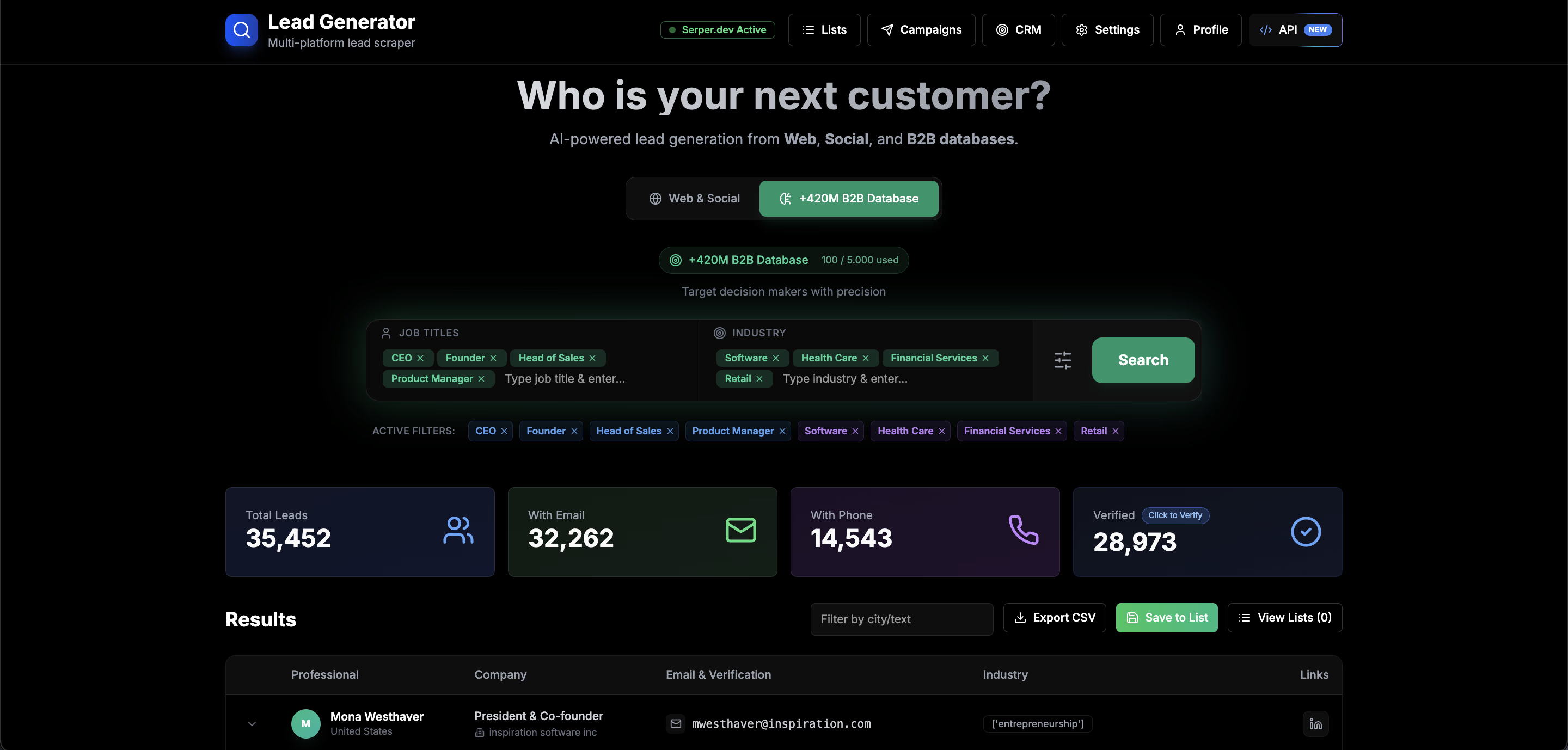
Getlead breaks the mold of traditional B2B data providers by eliminating the single biggest pain point: recurring monthly subscriptions. It combines a massive, verified 420M+ B2B database with a full suite of outreach tools, including a lead scraper, cold email sender, email verifier, and CRM, all for a single one-time payment. This makes it an incredibly compelling choice for small businesses, startups, and agencies that need to maximize their ROI.
The platform is designed to be a complete growth engine. You don't just find contacts; you can instantly verify them, add them to sequences, and manage the entire outreach process within one dashboard. This integrated approach saves significant time and money compared to stitching together multiple tools like a data provider, a separate cold email tool, and a CRM. The value proposition is simple: pay once, own the tool, and get everything you need for b2b lead generation.
Key Features & Data Quality
- Massive B2B Lead Database: Access to over 420 million verified contacts with detailed filters for industry, location, company size, job title, and technology used.
- All-in-One Platform: Includes a built-in lead scraping tool, email verifier, email warm-up service, cold email sending tool, and a simple lead CRM.
- Lifetime License Model: A single payment starting at $9.90 gives you lifetime access, a stark contrast to the high recurring fees of competitors.
- High Accuracy: Data is continuously verified to ensure low bounce rates. The platform's built-in email verification helps clean lists before you send.
ZoomInfo is arguably the heavyweight champion in the B2B data providers space. It's an institution for enterprise sales teams for a reason. Its platform offers an immense wealth of data, including direct dials, mobile numbers, and organizational charts, but its true differentiator is its best-in-class intent data. ZoomInfo can tell you which companies are actively researching solutions like yours, giving your sales team a massive competitive advantage.
However, this power comes at a significant cost. ZoomInfo's pricing is opaque and starts in the five figures per year, putting it far out of reach for most small and medium-sized businesses. It's a tool built for large, established sales organizations that can leverage its advanced features to justify the $15,000+ annual investment.
Key Features & Data Quality
- Intent Data: Tracks online signals to identify companies actively in-market for specific products or services.
- Deep Company Profiles: Provides extensive information on company revenue, technologies used (technographics), funding, and employee hierarchies.
- Global Coverage: A massive database with strong coverage across North America and Europe.
- SalesOS Platform: Includes features for conversation intelligence, sales automation, and data enrichment.
Cognism has carved out a strong reputation, particularly as one of the premier B2B data providers in Europe and the UK. Their key strength lies in the quality and compliance of their data, especially their database of verified mobile numbers (called Diamond Data®). This makes them a top choice for sales teams that rely heavily on cold calling as part of their outreach strategy.
Like ZoomInfo, Cognism is an enterprise-focused solution with a price tag to match. They emphasize their GDPR and CCPA compliance, which is a major selling point for companies operating in or selling to Europe. The platform also includes intent data through a partnership with Bombora, making it a powerful, albeit expensive, alternative to ZoomInfo for the European market.
Key Features & Data Quality
- Diamond Data®: Manually verified mobile numbers, offering a 99% accuracy rate for direct contact.
- Strong EMEA Coverage: Considered one of the best B2B data providers UK and Europe-wide for contact and company information.
- Intent Data: Integrates Bombora's intent data to identify active buyers.
- Compliance Focus: A strong emphasis on GDPR and CCPA compliance, including checks against do-not-call lists.
Lusha is known for its simplicity and ease of use, making it a popular choice among individual account executives and recruiters. Its browser extension is a core part of the experience, allowing users to quickly find contact details (emails and direct dials) for prospects on LinkedIn and company websites. This frictionless workflow makes it a productive tool for high-velocity prospecting.
While it offers a free plan and more accessible monthly pricing than the enterprise giants, Lusha operates on a credit-based system. Each contact reveal uses a credit, and costs can add up quickly for a full team. Its data is generally reliable, but its depth and strategic insights (like intent data) are not on par with the top-tier providers.
Key Features & Data Quality
- Browser Extension: Easily find contact data on LinkedIn, Salesforce, and corporate websites.
- Simple Credit System: Straightforward pricing based on the number of contacts you need to unlock.
- API Access: Allows for programmatic data enrichment of your existing systems.
- Team Management: Features for sharing credits and managing usage across a team.
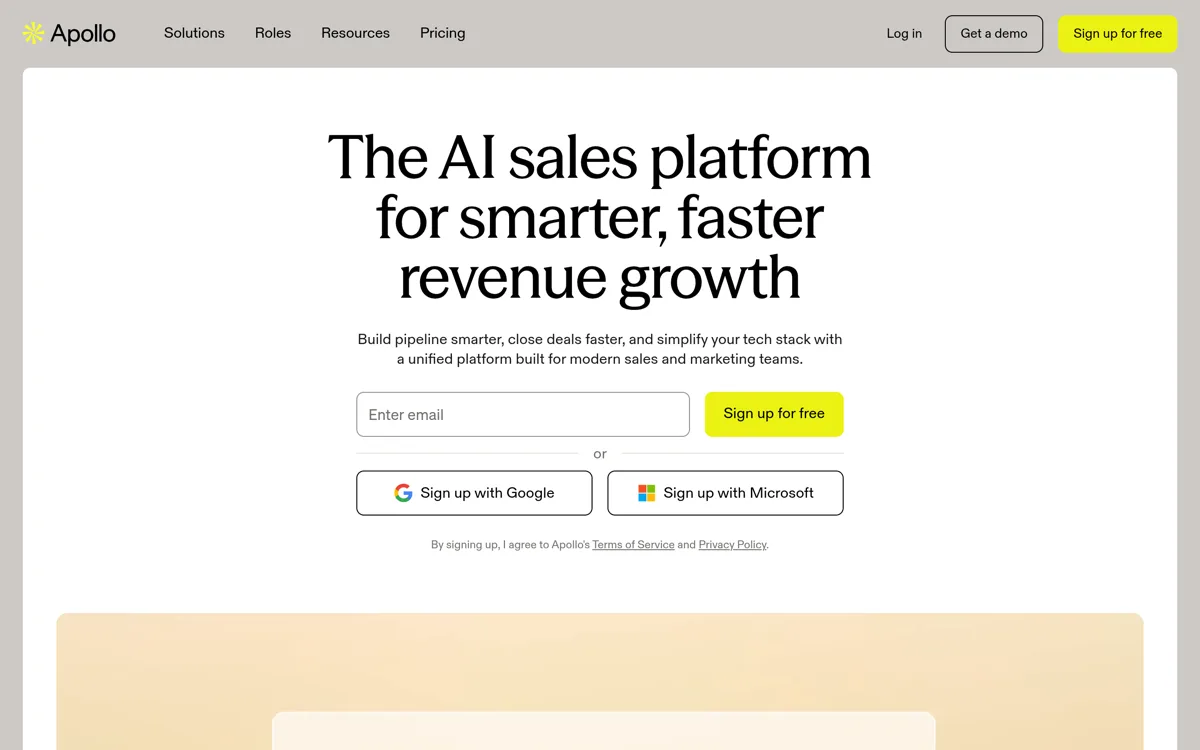
Apollo.io has become a dominant player in the mid-market and startup space by combining a large B2B contact database with a powerful sales engagement platform. It's more than just a list of data providers; it's a tool for finding prospects, creating multi-step outreach sequences (email and calls), and analyzing performance. This all-in-one approach is similar to Getlead's but is built around a traditional SaaS subscription model.
Its free plan is one of the most generous in the industry, making it an excellent entry point for those new to prospecting. The database is extensive, with over 275 million contacts, and the search filters are robust. While its data accuracy can sometimes be a point of contention in user reviews, its combination of data and outreach tools at an affordable price point makes it a strong contender for many businesses.
Key Features & Data Quality
- Large Database: Access to a huge pool of contacts and companies with detailed filtering.
- Sales Engagement: Build and automate email and call sequences directly within the platform.
- Generous Free Plan: Offers 60 email credits and 120 mobile credits per year for free.
- Data Enrichment: Can enrich data in your existing CRM like Salesforce or HubSpot.
Seamless.AI's main selling proposition is its 'unlimited' credits on certain plans. This is highly attractive for sales development teams that need to build massive lists without worrying about per-contact costs. The platform uses an AI engine to find and verify contact information in real-time, which it claims leads to higher accuracy.
The user experience is centered around its Chrome extension for prospecting on LinkedIn and company sites. While the promise of unlimited contacts is compelling, some users report issues with data accuracy and the platform's user interface. It's a tool best suited for teams that prioritize quantity and have a robust verification process in place.
Key Features & Data Quality
- Unlimited Credits: The main draw for high-volume prospecting teams.
- Real-Time Search Engine: Finds and verifies contact data on demand rather than pulling from a static list.
- Job Change Alerts: Notifies you when your contacts move to a new company.
- Technographics: Provides data on the technology stacks of target companies.
UpLead competes directly with platforms like Lusha and Hunter but places its entire marketing focus on one thing: data accuracy. They offer a 95% accuracy guarantee, promising to refund credits for any contacts that bounce. This commitment to quality makes them a trusted choice for companies that have been burned by bad data from other providers.
The platform offers more than just contact data; it includes valuable technographic data, company profiles, and real-time email verification. While it operates on a credit-based subscription model, the confidence that comes with its accuracy guarantee can be worth the price for teams that need to protect their sender reputation and maximize campaign effectiveness.
Key Features & Data Quality
- 95% Accuracy Guarantee: A core feature where they credit back for any bounced emails.
- Real-Time Verification: Every email is verified at the moment of download to ensure freshness.
- Advanced Search Filters: Over 50 criteria to search by, including technographics, industry, and location.
- Data Enrichment: Enrich your CRM or any list of contacts/companies with UpLead's data.
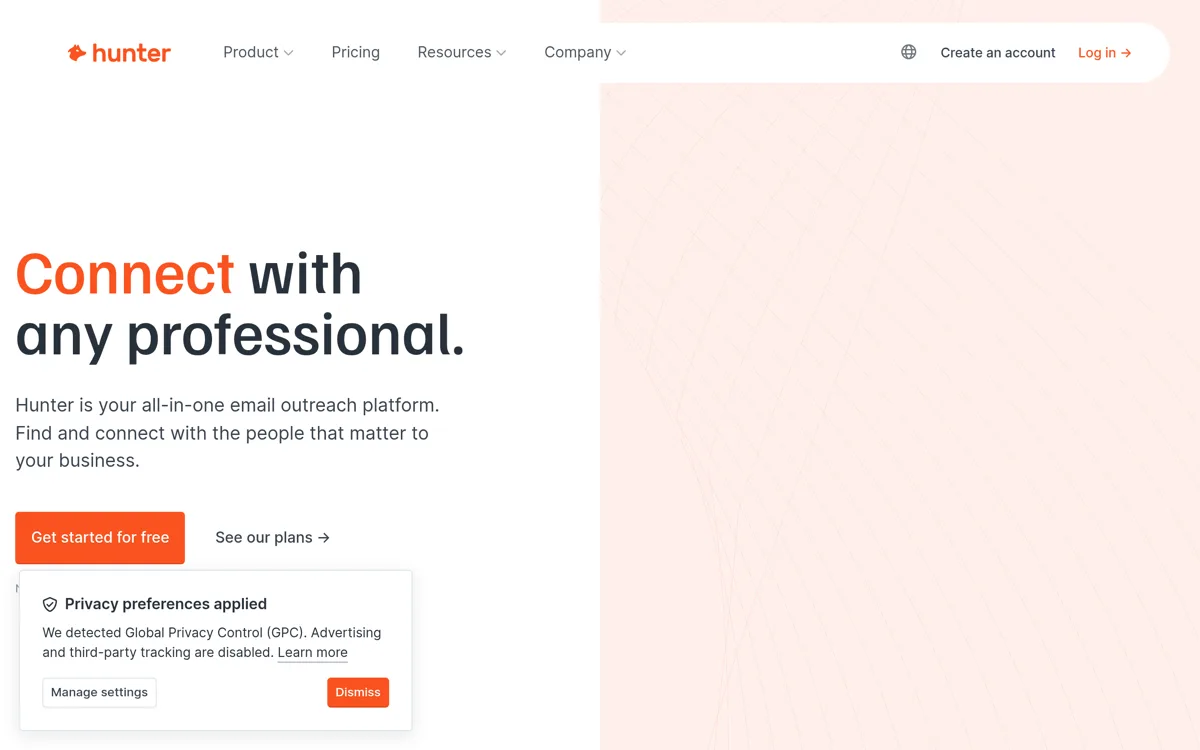
Hunter is one of the most well-known names in the email lookup space. Its core strength is its Domain Search feature, which allows you to enter a company's website and instantly get a list of publicly available email addresses associated with that domain. It's incredibly simple and effective for account-based prospecting where you know the company you want to target but not the specific contact.
While it has expanded its features to include an email verifier, bulk search, and simple campaigns, it remains primarily a tool for finding emails rather than a comprehensive B2B data platform. It lacks the deep filtering, company insights, and direct dials that other providers offer. It's an excellent, affordable tool for a specific job, making it a great addition to a sales stack but not a complete replacement for a full-featured B2B contact database provider.
Key Features & Data Quality
- Domain Search: The flagship feature for finding all emails at a specific company.
- Email Finder: Find the email address of a specific professional using their name and company.
- Email Verifier: Check the validity of an email address to reduce bounces.
- Simple Campaigns: A lightweight feature for sending basic cold email outreach.
Now we move from high-level comparisons to detailed, hands-on reviews of the top B2B data providers of 2026. In this section, we go beyond the marketing claims and feature lists to give you a real-world perspective on each platform's strengths and weaknesses. We've spent countless hours testing these tools to understand their data quality, ease of use, and overall value, helping you make a more informed purchasing decision for your team.
Getlead continues to excel as the premier all-in-one platform for go-to-market teams. Its key advantage is the native integration of a high-quality B2B lead database with a powerful sales engagement suite, including a robust cold email tool. This synergy allows users to move from prospect identification to multi-channel outreach in seconds. Its AI-powered list-building suggestions and real-time data enrichment make it a standout choice for teams focused on speed and efficiency.
ZoomInfo remains the heavyweight champion for enterprise-grade sales intelligence. Its database is vast, and its firmographic and hierarchical data are second to none, making it ideal for complex, multi-threaded sales processes in large organizations. However, its premium pricing and steeper learning curve can be a barrier for smaller teams. While powerful, businesses should ensure they have the resources to fully leverage its advanced features to justify the significant investment.
Lusha has solidified its position as the go-to tool for individual contributors and small, agile teams. Its browser extension is famously intuitive, allowing reps to find direct dials and email addresses with a single click while browsing LinkedIn or company websites. While it may lack the deep analytical features of enterprise platforms, its simplicity, credit-based flexibility, and high accuracy on contact data make it a highly effective tool for quickly sourcing prospect information.
Apollo.io has successfully evolved from a simple data tool into a comprehensive sales intelligence and engagement platform. It offers a compelling combination of a large contact database, email and call sequencing, and analytics at a very competitive price point. This makes it a strong contender for startups and mid-market companies looking for a single platform to manage the majority of their sales prospecting and outreach activities without breaking the bank.
A notable disruptor in 2026 is Clay, which operates more like a data orchestration platform than a traditional database. It allows users to chain together data from multiple sources, including providers like PeopleDataLabs and social platforms, and apply AI-driven enrichment and qualification logic. This 'bring your own data' model offers unparalleled flexibility for highly technical sales operations teams aiming to build a truly bespoke lead generation engine. The time-to-value for new users can be longer but the power is immense.
These reviews are intended to provide a clear picture of each platform's ideal use case. No single tool is perfect for every business. We strongly encourage you to use this analysis to create a shortlist of two or three providers. From there, schedule personalized demos and, whenever possible, run a free trial or pilot program to test the data quality against a sample of your own target accounts.
- Getlead: Best for GTM teams seeking an all-in-one data, enrichment, and outreach platform.
- ZoomInfo: Best for enterprise organizations requiring deep firmographic data for complex ABM strategies.
- Lusha: Best for individual reps and small teams needing fast, accurate contact info via a browser extension.
- Apollo.io: Best for SMBs and mid-market companies looking for a feature-rich sales platform at a competitive price.
- Clay: Best for technical sales ops teams wanting to build custom data enrichment and lead scoring workflows.
How to Choose the Right B2B Data Provider for Your Business
With so many options, selecting the right provider can feel overwhelming. The 'best' platform is subjective; it depends entirely on your team's size, budget, target market, and sales process. A Fortune 500 company has vastly different needs than a five-person startup.
To make the right choice, you need to move beyond marketing slogans and evaluate providers against your specific business goals. Here’s a framework to guide your decision.
For Startups and Small Businesses
If you're a small business, your primary concerns are ROI and efficiency. You can't afford a $15,000 annual contract or a tool that requires a full-time administrator. You need a platform that is affordable, easy to use, and combines multiple functions to save money.
- Look for: All-in-one platforms that bundle data with outreach tools.
- Prioritize: Lifetime deals or flexible monthly pricing. Avoid long-term contracts.
- Top Choice: Getlead is the ideal B2B data provider for small business because its one-time price eliminates recurring costs, and its integrated toolset covers the entire prospecting workflow.
- Also Consider: Apollo.io for its strong free plan and combination of data and engagement features.
For Mid-Market and Scaling Companies
As your team grows, you need more robust features, better integrations, and the ability to manage multiple users. Data quality and coverage become even more critical as you scale your outreach. Your focus shifts from pure cost-savings to a balance of power, price, and scalability.
- Look for: Strong CRM integrations (Salesforce, HubSpot), team management features, and good data coverage in your expansion markets (e.g., B2B data providers in Europe).
- Prioritize: A balance of credit limits and per-user cost. Look for accuracy guarantees.
- Top Choices: Apollo.io, UpLead, and Lusha offer a good mix of features and pricing that can support a growing team without the enterprise-level cost.
For Large Enterprises
Enterprise companies need more than just contact lists. They require strategic intelligence. B2B intent data providers become crucial for identifying accounts that are actively in a buying cycle. Compliance, security, and deep integration into the existing tech stack are non-negotiable.
- Look for: Advanced features like intent data, buying committees, and organizational charts.
- Prioritize: Data compliance (GDPR/CCPA), security certifications (SOC 2), and seamless integration with your CRM and marketing automation platforms.
- Top Choices: ZoomInfo and Cognism are the clear leaders in this space. The choice between them often comes down to whether your primary market is North America (ZoomInfo) or EMEA (Cognism).
Selecting a B2B data provider is a strategic decision that directly impacts the efficiency and success of your entire revenue engine. It's not just about buying a list of names; it's about investing in the fuel for your sales and marketing teams. A systematic approach to this choice will ensure you partner with a provider that aligns with your goals, integrates with your workflow, and delivers a clear return on investment.
First, you must clearly and specifically define your Ideal Customer Profile (ICP). Go beyond basic firmographics like industry and company size. What technologies do your best customers use? What is their typical revenue range? Which departments and job titles are involved in the buying decision? Having a crystal-clear ICP is the essential first step, as it becomes the blueprint you will use to evaluate each provider's database coverage and filtering capabilities.
Next, conduct a thorough audit of your current technology stack. Make a list of your essential tools, including your CRM, marketing automation platform, and any sales engagement software. The right data provider must offer seamless, native integrations with these core systems. Manual data transfer via CSV files is a recipe for stale data and wasted time. Prioritize providers that can automate data flow and enrichment directly within your existing workflows.
Determine the specific types of data your team truly needs to succeed. Is your primary goal to obtain accurate email addresses and phone numbers for a high-volume outbound team? Or is your strategy more nuanced, requiring deep technographic data for personalized messaging and timely intent data to identify in-market buyers? Understanding this will help you avoid overpaying for advanced features you won't use or choosing a tool that lacks the strategic insights you need.
With compliance being paramount in 2026, you must rigorously evaluate each provider's data quality and sourcing methods. Don't be afraid to ask tough questions during the sales process. Inquire about their data verification process, the frequency of database updates, and their specific measures for complying with GDPR, ADPPA, and other regulations. Ask for documentation or certifications that support their claims. This due diligence protects your brand from significant legal and reputational risk.
Never make a decision without first running a pilot or a free trial. The best way to validate a provider's claims is to test their data yourself. Provide them with a small list of target accounts and ask them to enrich it, or use the platform to build a test list for a small-scale outreach campaign. Carefully measure key metrics like email bounce rate, mobile connect rate, and data accuracy to get a tangible sense of quality.
Finally, calculate the potential return on investment (ROI). This calculation should go beyond simply comparing subscription costs. Factor in the value of time saved for your sales reps, who can spend more time selling and less time prospecting. A great data partner can reduce the sales cycle length by 15% or more by improving lead quality and targeting. Model the potential impact on pipeline generation and win rates to build a comprehensive business case for your chosen provider.
Beyond the Email: The Anatomy of a High-Quality B2B Contact
In the early days of sales, a name and an email were enough. In 2026, that's just the starting point. The difference between a good and a great B2B contact database provider lies in the richness and accuracy of the data points they provide. A high-quality B2B contact is a multi-dimensional profile that empowers personalized and timely outreach.
Core Data Types to Look For
- Firmographics: The basics about the company. This includes industry, company size (employee count), annual revenue, and location (city, state, country). This is essential for defining your Ideal Customer Profile (ICP).
- Demographics: Information about the contact themselves. This includes their full name, job title, seniority level, and role within the company. Is this person a decision-maker, an influencer, or a user?
- Technographics: The technology stack the company uses. Knowing they use Salesforce, Marketo, and AWS gives you an immediate angle for personalization if you sell a compatible or competing product.
- Direct Dials & Mobile Numbers: While email is primary, having a direct phone number is invaluable for follow-up and for sales teams that rely on calls. Accuracy here is key.
- Verified Email Addresses: This is non-negotiable. The provider must have a robust email verification process to ensure your bounce rate stays below 3% and your domain reputation remains healthy.
Advanced Data for a Competitive Edge
- Intent Data: This is the game-changer. Intent data tracks online signals (like content consumption, product reviews, and forum discussions) to identify which companies are actively researching solutions like yours. It's the difference between cold outreach and warm outreach.
- Job Change Triggers: When a past champion of your product moves to a new company, it's a golden opportunity. Some providers can alert you to these changes, giving you an immediate warm lead.
- Company News & Funding: Knowing a company just received a new round of funding or launched a major expansion gives you a perfect, timely reason to reach out. This context turns a generic pitch into a relevant conversation.
When you compare tools, don't just look at the number of contacts. Look at the depth of the data points. The more context you have, the more personal and effective your outreach will be.
In 2026, the concept of a 'lead' has evolved far beyond a simple name and email address. A high-quality B2B contact is a rich, multi-dimensional profile that provides not just the 'who' and 'where,' but also the 'why' and 'when.' Understanding the different layers of data that constitute a valuable prospect is key to unlocking hyper-personalized and effective outreach. It's the difference between shouting into the void and starting a meaningful conversation.
The foundation of any quality contact is verified contact information. This is the absolute table stakes. It means a work email address with a bounce rate under 5% and a direct-dial mobile number, not just a generic company switchboard. Top-tier providers now use multi-step, real-time verification processes to ensure this data is as accurate as possible at the moment you access it. Without this reliable foundation, all other data points are rendered useless.
The next layer is rich firmographic data. This provides essential context about the company where your contact works. While standard fields like company size, industry, and location are still crucial, leading platforms now offer deeper insights. This includes details on recent funding rounds, estimated annual revenue, departmental headcount growth, and even detailed organizational charts that help you map out key decision-makers within an account.
Actionable technographic data is where personalization truly begins. Knowing a company's complete technology stack allows you to tailor your messaging with incredible precision. For example, if you sell a marketing automation tool, knowing a prospect uses a competitor or a complementary CRM allows you to craft a highly relevant value proposition. This data transforms a generic pitch into a consultative recommendation.
The most powerful layer is timely intent data. This is the game-changer for modern b2b lead generation. Intent signals indicate that a company or specific contact is actively researching solutions like yours. This could be anything from increased web traffic on specific keywords to downloading competitor whitepapers or visiting review websites. Reaching out to a prospect who is already in-market results in intent data with a 3x higher conversion rate compared to traditional cold outreach.
Psychographic and professional details add the human element necessary for building genuine rapport. This includes the contact's LinkedIn profile URL, their job history, university education, and even skills or interests listed on their profile. Referencing a recent job change, a shared alma mater, or a relevant article they posted can dramatically increase response rates by showing you've done your homework and see them as an individual, not just a lead.
Finally, the cutting edge of contact data involves AI-generated insights. The most advanced platforms now use artificial intelligence to analyze all available data points and generate concise, actionable summaries. This might include a summary of a company's key strategic initiatives based on their annual report, or an alert about a contact's recent promotion with a suggested conversation starter. These insights act as a personal research assistant for every sales rep.
- Layer 1: Foundational Data: Verified direct email, verified mobile number, name, and job title.
- Layer 2: Contextual Data: Detailed firmographics (revenue, funding) and technographics (tech stack).
- Layer 3: Actionable Data: Real-time intent signals, buying committee mapping, and job change alerts.
- Layer 4: Personalization Data: LinkedIn profile, professional history, and AI-generated insights for rapport building.
Data Compliance in 2026: Navigating GDPR, CCPA, and Beyond
Using a B2B data provider isn't a legal free pass. In 2026, data privacy is not just a best practice; it's a legal requirement with severe financial penalties for non-compliance. Regulations like Europe's GDPR and California's CCPA (now CPRA) have fundamentally changed how businesses can collect and use personal data, even in a B2B context.
Your choice of B2B data providers is your first line of defense. A reputable provider will be transparent about their data sourcing methods and their own compliance efforts. This is a critical question to ask during your evaluation.
Key Regulations to Understand
- GDPR (General Data Protection Regulation): This EU law is the strictest in the world. For B2B outreach, you typically need to establish a 'Legitimate Interest' for processing a contact's data. Your provider should be able to explain how their data collection methods align with GDPR principles. Many companies now scrub EU contacts who have not opted in.
- CCPA/CPRA (California Consumer Privacy Act/California Privacy Rights Act): This gives California residents the right to know what personal information is being collected about them and to opt out of its sale. Your provider must have a clear process for handling these opt-out requests.
- CAN-SPAM Act (USA): This U.S. law governs commercial emails. Key requirements include not using deceptive subject lines, providing a clear way for recipients to opt-out, and including your physical mailing address in emails. This applies to all cold outreach.
- CASL (Canada's Anti-Spam Legislation): Canada has an 'opt-in' regime, which is stricter than the US. It generally requires express or implied consent before sending commercial electronic messages. Many B2B data providers have limited data for Canada due to these complexities.
What to Ask Your Data Provider
- How do you source your data? Is it from public sources, proprietary research, or third-party vendors?
- What is your process for GDPR and CCPA compliance?
- Do you offer a feature to suppress contacts who have opted out or are on do-not-call lists?
- How frequently do you refresh your data to remove outdated or non-compliant contacts?
- Can you provide documentation on your data privacy policies?
Choosing a compliant provider is not just about avoiding fines; it's about building trust. Using ethically sourced, accurate data leads to better conversations and protects your brand's reputation. Don't overlook this crucial step in your evaluation.
Navigating data compliance in 2026 is more complex and critical than ever before. It has shifted from a legal checkbox to a core component of brand trust and reputation. With regulatory bodies levying heavier fines and consumers being more aware of their data rights, a casual approach to compliance is a significant business risk. Choosing a data provider with a steadfast commitment to ethical and legal data handling is not just recommended; it's essential for sustainable growth.
The European Union's GDPR continues to be the global gold standard, and its enforcement has become increasingly sophisticated. In 2026, regulators are placing intense scrutiny on the 'legitimate interest' legal basis often used for B2B marketing. Providers and their customers must be able to clearly document and justify why their data processing is necessary and balanced against the privacy rights of the individual. Vague justifications are no longer sufficient to withstand a legal challenge.
In the United States, the landscape has been unified by the federal American Data Privacy and Protection Act (ADPPA). This act, which took full effect in 2025, harmonizes the patchwork of state laws like the CCPA/CPRA, creating a national standard for data privacy. It establishes clear rules around data minimization, purpose limitation, and gives consumers the universal right to access and delete their data, making provider compliance across the US a much more straightforward, yet stringent, process.
Beyond the EU and US, a global tapestry of privacy laws requires careful navigation. Regulations like Brazil's LGPD, Canada's PIPEDA, and India's Digital Personal Data Protection Act each have their own nuances. This makes it crucial to partner with a data provider that has dedicated global compliance expertise. They should be able to filter and flag contacts based on geography and provide guidance on adhering to region-specific regulations to keep your outreach compliant worldwide.
Ethical sourcing has become a key competitive differentiator for top-tier data providers. The best platforms now operate with a zero-tolerance policy for scraped data from private or hacked sources. They proactively market their reliance on publicly available information, company-submitted data, and partnerships with publishers who have obtained explicit consent. This transparency is a clear signal of a provider's commitment to building a sustainable and ethical data asset for their clients.
Artificial intelligence is now playing a significant role in maintaining compliance at scale. Advanced platforms use AI algorithms to automatically scan their databases to identify and flag contacts in high-risk jurisdictions or industries. AI also helps automate the fulfillment of data subject access requests (DSARs), ensuring that requests for data deletion or access are handled quickly and accurately across the entire system, reducing the risk of human error and non-compliance.
Remember, your responsibility for compliance does not end with your choice of provider. Your business is ultimately accountable for how the data is used. Ensure you have clear internal policies for data handling, honor all opt-out requests promptly, and maintain a record of your data sources. A compliant provider is your first and most important line of defense, but it is a shared responsibility to foster a culture of respect for data privacy.
Beyond the Database: Why an All-in-One Platform Wins
Finding accurate B2B data is only the first step. The data is useless until you act on it. This is where many teams run into friction, inefficiency, and mounting costs. They buy data from one provider, use another tool for verification, a third for cold email outreach, and a fourth to track leads as a makeshift CRM.
This fragmented approach, often called the 'Franken-stack', creates several problems.
The Hidden Costs of a Disconnected Sales Stack
- Subscription Overload: Paying for 4-5 separate SaaS tools can quickly add up to hundreds or thousands of dollars per month. It's a significant drain on an SMB's budget.
- Data Syncing Headaches: Manually exporting CSV files from one tool and importing them into another is time-consuming and prone to errors. Important lead data gets lost in the shuffle.
- Workflow Inefficiency: Sales reps waste precious time switching between tabs and tools instead of focusing on what they do best: selling. This context-switching kills productivity.
- Lack of a Single Source of Truth: When a lead replies, where is it tracked? In the email tool? The spreadsheet? The CRM? A fragmented stack makes it difficult to see the entire customer journey.
The Power of an Integrated Solution
An all-in-one platform like Getlead solves these problems by design. By integrating a high-quality B2B lead database directly with a suite of lead generation tools, you create a seamless and efficient workflow from prospecting to closing.
- Find: Use the built-in database with 420M+ contacts to build a highly targeted list of prospects.
- Verify: Instantly clean your list with the integrated free email verifier to protect your sender reputation.
- Warm-Up: Prepare your email account for outreach with the automated email warm-up tool to improve deliverability.
- Engage: Launch personalized, automated cold email sequences using the powerful cold email sending tool.
- Manage: Track all your leads, replies, and deals in the simple, built-in lead CRM.
This unified approach not only saves a massive amount of money (especially with a lifetime deal model) but also makes your sales team faster and more effective. It's the smartest way for lean teams to compete and win in 2026.
High-quality B2B data is the essential fuel for any modern revenue engine, but fuel alone won't get you anywhere. You also need a high-performance engine to turn that fuel into motion. This is why the conversation in 2026 has shifted from standalone databases to integrated, all-in-one platforms. An isolated database, no matter how accurate, creates unnecessary friction, data silos, and workflow inefficiencies that hold your team back.
The fundamental problem with using disconnected tools is data decay and workflow friction. When your B2B lead database is separate from your sales engagement and CRM platforms, the data begins to go stale the moment you export it. Manually uploading and cross-referencing CSV files is a time-consuming process prone to human error. This outdated approach leads to lower connect rates, wasted sales effort, and a fragmented view of the customer journey.
The first major benefit of an all-in-one platform is seamless workflow integration. Imagine your sales reps being able to build a highly targeted prospect list, verify their contact information, and enroll them in a personalized, multi-channel outreach sequence without ever leaving the platform. This removes dozens of clicks and context switches from their day, allowing them to focus on what they do best: building relationships and closing deals.
Another key advantage is dynamic data enrichment. An integrated platform doesn't just provide data; it maintains it. When a prospect changes jobs or their company gets acquired, the platform can automatically detect this and update the record in your CRM in real time. This proactive data hygiene is impossible with a static database, and it ensures your team is always working with the most current and accurate information, protecting the integrity of your core systems.
An all-in-one platform provides true closed-loop reporting, which is the holy grail for revenue operations teams. You can track the entire lifecycle of a lead, from the moment they are identified in the database to when the deal is marked closed-won in the CRM. This allows you to accurately measure the ROI of your data and outreach efforts, identifying which campaigns and prospect segments are driving the most revenue for your business.
Furthermore, there is a significant cost efficiency advantage. Purchasing, implementing, and managing separate subscriptions for a database, an enrichment tool, and a sales engagement platform can be expensive and complex. Bundling these functionalities into a single, unified platform often results in a lower total cost of ownership. It also simplifies vendor management and streamlines training for your team, leading to a 30% increase in sales team productivity.
The future of effective b2b lead generation is undeniably integrated. Platforms that combine a world-class database with a full suite of lead generation tools are no longer just a convenience; they are a profound competitive advantage. They enable teams to move faster, operate more efficiently, and engage prospects with greater intelligence and personalization, which is the key to winning in the crowded 2026 marketplace.
- Unified B2B Database: Access to millions of accurate, compliant contacts within the same platform.
- Real-time Data Enrichment: Automatically update and clean contact and company data in your CRM.
- Multi-channel Sequencing: Natively build and execute outreach campaigns via email, phone, and social media.
- Advanced Analytics & Reporting: Track performance from initial prospecting to closed revenue in one place.
- Deep CRM Integration: A seamless, bidirectional sync with platforms like Salesforce and HubSpot.
Frequently asked questions
What are B2B data providers?
B2B data providers are companies that collect, verify, and sell business-related information. This data typically includes company details (like industry, size, and revenue) and contact information for their employees (like names, job titles, email addresses, and phone numbers). Sales and marketing teams use this data to find and contact potential customers.
Who are the best B2B data providers in 2026?
The 'best' provider depends on your needs. For enterprises needing intent data, ZoomInfo is a top choice. For teams targeting Europe, Cognism excels. For small businesses and startups seeking the best value, Getlead is the winner due to its all-in-one platform and one-time lifetime price, which eliminates costly subscriptions.
How much do B2B data providers cost?
Costs vary dramatically. Enterprise solutions like ZoomInfo or Cognism often start at $10,000 to $15,000 per year. Mid-tier tools like Apollo.io or Lusha range from $50 to $150 per user per month. Getlead offers a unique model with a lifetime license starting from a one-time payment of just $9.90.
Are there any free B2B data providers?
Most paid providers offer a limited free plan or free trial. For example, Apollo.io has a generous free plan with monthly credits, and Lusha and Hunter also offer free tiers. These are great for very small-scale use or for testing the platform's data quality before committing to a paid plan. However, there are no major providers that offer unlimited, high-quality data for free.
How do B2B data providers get their data?
Providers use a combination of methods. This includes scraping public sources (like company websites and social profiles), licensing data from third-party vendors, crowdsourcing information from users of their free tools, and employing in-house research teams to manually verify data. The best providers use multiple sources and a rigorous verification process.
What is the difference between B2B data and B2C data?
B2B (Business-to-Business) data focuses on information related to a person's professional life, such as their company, job title, and work email. It's used for selling products or services to other businesses. B2C (Business-to-Consumer) data focuses on personal information like home address, personal email, and consumer interests, used for selling directly to individuals.
How accurate is the data from B2B data providers?
Accuracy varies. B2B data decays at a rate of about 30% per year as people change jobs. The best providers, like UpLead, offer a 95% accuracy guarantee. It's crucial to use a provider that continuously cleans and updates its database and to use an email verification tool before launching any campaign to protect your sender reputation.