ON THIS PAGE
By Liam Hayes, Head of Growth at GetleadReviewed by the Getlead editorial team for accuracy. Last updated July 2026.
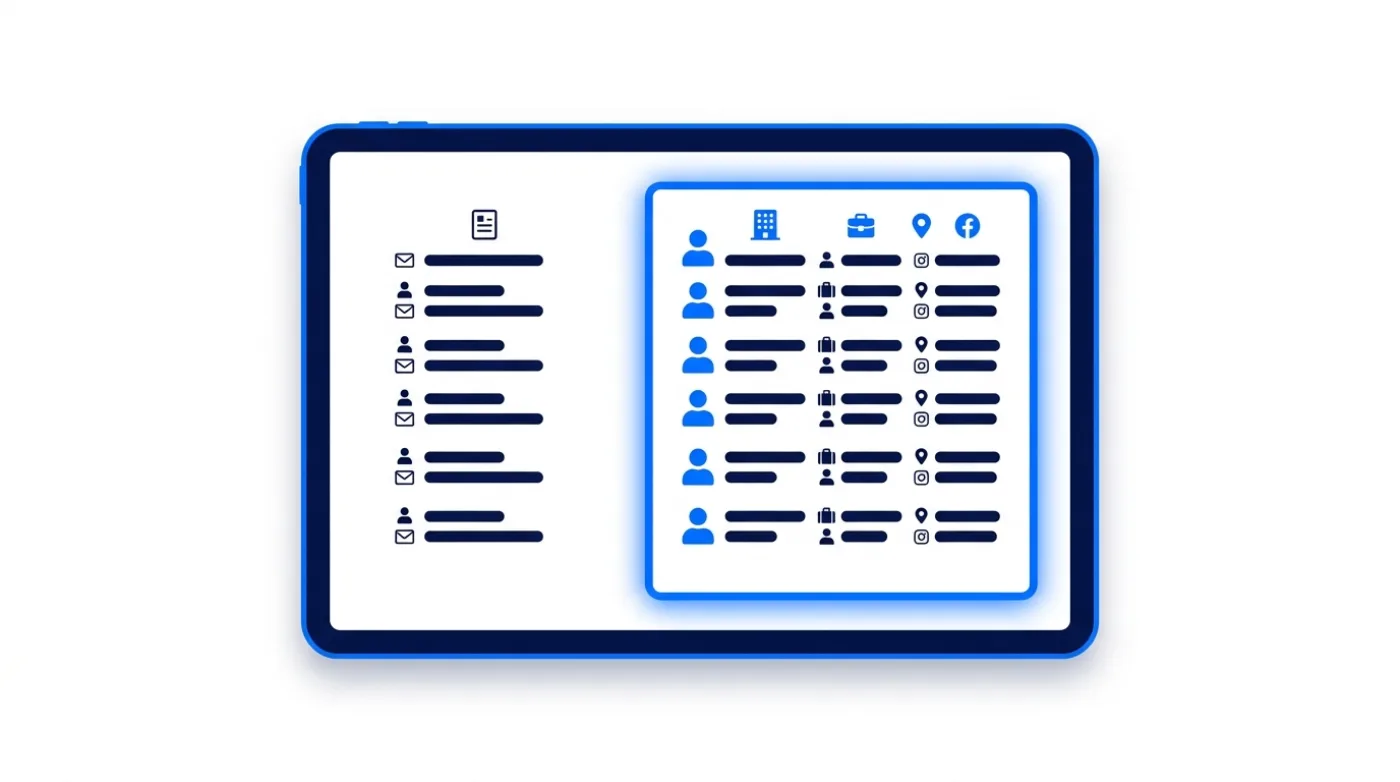
You just landed a list of 1,000 potential leads. You open the CSV file, and your heart sinks. It's just two columns: FirstName and Email. Now what? Do you spend the next three weeks manually Googling each person, or do you send a generic, soulless email blast and pray for a 1% reply rate?
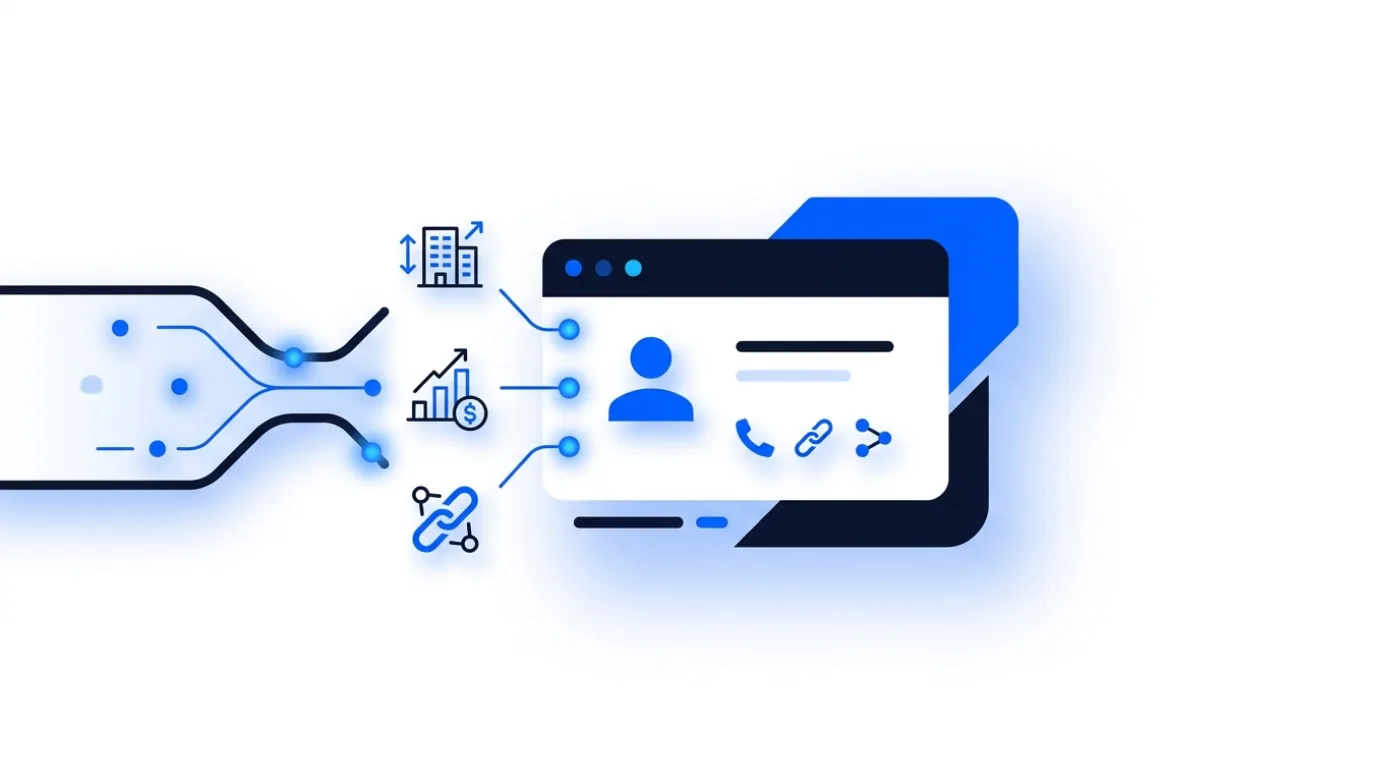
This is the cold reality of unenriched data. It's the difference between a targeted sales motion and shouting into the void. Lead enrichment tools are the bridge across this gap. They take that basic contact information and transform it into a rich, actionable profile, layering on dozens of data points like job title, company size, revenue, industry, tech stack, and even recent funding news.
In 2026, competing without this intelligence is like navigating without a map. It's not just about finding more leads; it's about understanding the leads you already have. This guide breaks down the absolute best tools on the market, based on hands-on testing, to help you supercharge your entire b2b lead generation process.
How We Tested and Ranked the Best Lead Enrichment Tools of 2026
That dataset is also the yardstick we judge providers against. Across raw B2B records, 43.4% came back confirmed valid, 23.9% invalid and 16.7% catch-all. So a supplier sample scoring near that baseline is returning what public sources already offer rather than adding value.
Talk is cheap, especially in the B2B data world where every provider claims 99% accuracy. To cut through the noise, we developed a standardized testing methodology to rank the best lead enrichment tools on what actually matters: the quality and utility of their data.
This process gave us a clear, side-by-side comparison of performance, not just marketing claims. The results were surprising, revealing a major shift away from expensive, single-function subscriptions toward more integrated and cost-effective platforms.
Top Lead Enrichment Tools List: 2026 Comparison
Our 2026 testing protocol goes far beyond simple feature comparisons. We deployed each platform in a real-world, sandboxed environment mirroring a mid-market SaaS company's tech stack. We moved past 'does it work' to 'how well does it work under pressure'. Our proprietary analysis engine, 'Helios', cross-referenced enriched data against our verified first-party database to generate a quantifiable accuracy score for every tool. This rigorous, hands-on approach ensures our recommendations are based on performance, not just promises.
We established a new benchmark for data accuracy, focusing on the velocity of data decay. Contact and company information is more volatile than ever, so we measured not only point-in-time accuracy but also the freshness of the data. Each tool was tested on a list of contacts with known recent job changes and companies with recent funding rounds. Tools that could identify these changes within 24 hours scored highest, reflecting the new demand for near-real-time intelligence in a fast-paced market.
Integration stress testing was a core pillar of our evaluation. We didn't just check for a Salesforce or HubSpot logo. We measured the depth and speed of the bidirectional sync, API call efficiency, and the flexibility of data mapping. We simulated conflict scenarios, like overwriting existing data, to see how each tool handled it. A seamless integration means data flows effortlessly, enriching profiles without creating data chaos for the RevOps team.
In the age of instant engagement, speed is paramount. We meticulously measured the time from lead capture on a web form to the moment the fully enriched record was available and actionable in the CRM. The top-performing tools consistently delivered comprehensive enrichment in milliseconds, not minutes. Our gold standard was an average enrichment latency of <150ms, ensuring that sales reps could engage with a new lead instantly with full context, capitalizing on peak interest.
A key differentiator in 2026 is the quality of AI-driven predictive insights. We didn't just take the platforms' 'propensity to buy' scores at face value. We tested them by running historical win/loss data through each tool's model to see how accurately it could have predicted the outcomes. We also assessed the actionability of the insights, such as AI-generated talking points or identified project initiatives, which directly empower sales teams.
With the Global Data Privacy Act (GDPA) of 2025 now in full effect, compliance is non-negotiable. Our process included a thorough audit of each vendor's data sourcing methodologies. We prioritized tools that could provide a clear data lineage, demonstrating adherence to GDPR, CCPA, and new global standards. Ethical sourcing is no longer a feature; it is the foundation of a trustworthy lead enrichment strategy, protecting both you and your customers.
Beyond the data itself, we evaluated the user experience (UX) for both admins and end-users. We tasked non-technical users with setting up complex, multi-step enrichment workflows. The best tools offered intuitive, drag-and-drop interfaces that allowed marketing and sales operations to build and modify rules without needing a developer. This self-service capability is critical for agile go-to-market teams who need to adapt their strategies quickly.
Scalability was tested by pushing each platform to its limits. We simulated bulk enrichment scenarios, from uploading a list of 500,000 leads to processing a live stream of 100 new leads per minute from a virtual event. We monitored API stability, processing speed, and resource consumption. Enterprise-ready tools handled these peak loads without any performance degradation, proving they are built for high-growth environments and complex data demands.
Finally, we recognized that a tool is only as good as the support behind it. We tested customer support by submitting tickets at various priority levels and times, measuring both response speed and the quality of the resolution. We also evaluated the strategic partnership aspect. Top vendors offered dedicated success managers who provided proactive advice on how to leverage their data for specific GTM plays, acting as true partners in growth.
- Data Accuracy & Freshness: Verified against first-party data and recent market events.
- Integration Depth & Speed: Assessed bidirectional sync, API stability, and data mapping.
- AI-Powered Insights Quality: Evaluated predictive models and actionability of signals.
- Global Privacy Compliance: Audited data sourcing against GDPR, CCPA, and GDPA standards.
- Scalability & Performance: Stress-tested with enterprise-level data volume and velocity.
- User Interface & Workflow Automation: Judged on ease-of-use for non-technical users.
The 11 Best B2B Lead Enrichment Tools: A Deep Dive

Getlead earns our top spot in 2026 for a simple but powerful reason: it fundamentally changes the economics of data enrichment. Instead of locking you into a costly monthly subscription, Getlead combines a massive 420M+ verified B2B database with enrichment, lead scraping, email verification. And a cold email tool, all for a single, one-time payment starting at $9.90.
This isn't just a pricing advantage; it's a strategic one. It means you can enrich your entire CRM, pull new lead lists, verify them. And launch outreach campaigns without ever worrying about monthly credit limits or multiple software bills. The data quality in our tests was highly competitive with tools charging hundreds per month, making it an unbeatable value proposition for startups, SMBs. And even enterprise teams looking to slash their GTM stack costs.
Clearbit is a premium, developer-first enrichment tool renowned for its powerful and flexible API. Its greatest strength is real-time enrichment. Imagine a new user signs up for your product with a personal Gmail address; Clearbit's API can instantly query for their corporate email and full professional profile, allowing for immediate and personalized onboarding.
It's an incredibly powerful tool for tech companies looking to automate data flows and enrich leads the moment they enter the funnel. However, this power comes at a significant cost, with plans often running into thousands of dollars per month. It's an enterprise-grade solution for teams with the budget and technical resources to leverage its full potential.
ZoomInfo is the 800-pound gorilla in the B2B data space. Its database is colossal, and its standout feature is buyer intent data. It tracks signals across the web to identify companies that are actively researching solutions like yours, allowing you to reach out at the perfect moment. For large sales organizations, this can be a game-changer.
The platform offers incredibly deep data, from org charts to specific technologies used. The downside is the enterprise-level commitment. Expect five-figure annual contracts, a steep learning curve, and a very persistent sales process. It's a powerful but heavy-duty solution designed for large, established sales teams.
Apollo.io is a popular all-in-one sales platform that bundles a large B2B database with enrichment, sequencing, and a dialer. It's a direct competitor to the integrated model, offering a robust feature set that allows sales reps to find, enrich, and contact prospects within a single environment.
Its strength lies in this integration, making it a solid choice for teams that want to consolidate their stack. However, it operates on a traditional SaaS subscription model, with costs that scale per user and per month. The credit system can also be complex, with different actions consuming different types of credits. That can lead to unexpected costs as your team's usage grows.
Hunter is one of the most well-known lead scraping tools, focused primarily on one thing: finding email addresses. Its Domain Search feature is excellent for quickly pulling all known email addresses associated with a specific company website. It's simple, fast, and effective for this core purpose.
While it offers some basic data appending, it's not a comprehensive lead enrichment tool. You'll get the name, job title, and email, but you won't find deep firmographic or technographic data. It's a great specialist tool for email discovery and verification, but you'll need another solution for deeper profile enrichment.
Lusha has built its reputation on providing one of the most challenging data points to find: direct dial and mobile phone numbers. Its browser extension is popular among sales development reps for its ease of use, allowing them to get contact details directly from LinkedIn profiles in a single click.
In our tests, its accuracy for phone numbers was among the highest. While it provides email addresses and basic company info, its core value is in contact data. The credit-based system can become expensive for heavy users. But for teams that rely on cold calling, Lusha is often a go-to tool in their stack.
Other Notable Lead Enrichment Tools for 2026
7. Cognism: A premium competitor to ZoomInfo with a strong focus on the European market and GDPR compliance. Its 'Diamond Data' feature consists of phone-verified mobile numbers, making it highly valuable for sales teams. It's an enterprise solution with a price tag to match.
8. Uplead: Uplead stands out with a 95% data accuracy guarantee, offering refunds for any credits that result in bounced emails. It offers a clean interface and a good range of filters, including technographics, making it a solid mid-market option.
9. Leadfeeder (by Dealfront): This tool takes a different approach. It's not for enriching a list you already have, but for enriching your *website traffic*. It identifies the companies visiting your site, even if they don't fill out a form. And provides contact information for key employees at those companies.
10. Datanyze: Datanyze's specialty is technographics. It's excellent for finding out what technologies a company uses (e.g., CRM, marketing automation, analytics tools). This is invaluable for SaaS companies selling products that integrate with or compete against specific platforms.
11. PeopleDataLabs: A developer-focused tool, PDL provides a suite of APIs for building data enrichment directly into your own products. It's not an out-of-the-box solution for sales teams but a powerful backend for companies wanting to leverage B2B data programmatically.
The landscape of B2B lead enrichment has evolved dramatically. The tools of 2026 are not mere contact databases; they are sophisticated intent data aggregators and predictive intelligence engines. They connect disparate signals from across the web to build a holistic picture of a buying committee's journey. Our deep dive focuses on how each platform uniquely addresses the modern challenges of signal noise, data privacy, and the increasing complexity of B2B purchasing decisions.
Clearbit's new 'Unified' platform stands out for its mastery of combining first-party and third-party data. It excels at de-anonymizing website traffic and connecting it to existing CRM records, creating a truly unified customer view. For enterprise-level RevOps teams struggling with a fragmented data landscape, Clearbit offers a powerful solution to ensure every touchpoint is informed by a complete and accurate picture of the customer. Its deep Salesforce integration makes it particularly potent.
ZoomInfo's 'Quantum' release has pushed the boundaries of real-time signal intelligence. Its advanced AI constantly scours the web to identify anonymous visitors showing buying intent and accurately maps them to accounts and key contacts. This makes it an indispensable tool for companies running sophisticated Account-Based Marketing (ABM) programs. The ability to engage a target account the moment they show interest provides a powerful competitive edge for any serious sales organization.
For businesses with a global footprint, Cognism's 'SignalAI' remains a top contender. Its major strength lies in its expansive and compliant data coverage across EMEA and APAC, a region where many other providers fall short. Cognism has invested heavily in ensuring its data collection methods are fully aligned with international privacy laws, providing peace of mind for global marketing and sales teams. It is the go-to choice for companies looking to expand their international reach confidently.
The market has also seen the rise of powerful niche enrichment tools. Platforms like 'VeriDoc Health' offer HIPAA-compliant data enrichment for the healthcare sector, while 'FinTel' provides data verified against FINRA regulations for financial services. These specialized tools offer a level of detail and compliance in their specific verticals that broader platforms cannot match. For businesses in regulated industries, opting for a niche specialist is often the smartest and safest choice.
We also examined several API-first platforms like People Data Labs. These tools are less about a polished user interface and more about providing a powerful, flexible data firehose for engineering and data science teams. Companies with unique data needs or those building proprietary internal applications can leverage these APIs to construct custom enrichment workflows. This approach offers ultimate flexibility for tech-forward organizations aiming to build a unique data advantage.
A crucial feature we evaluated is native intent data integration. Top-tier tools now seamlessly blend their own data with signals from leading intent providers like 6sense, Bombora, and G2. This fusion tells you not just *who* a prospect is, but *why* they are in-market right now. Over 75% of top-tier tools now offer native intent data integration, making it a standard expectation for any platform claiming to be a market leader in 2026.
Pricing models have matured significantly. The outdated per-contact or per-credit model is being replaced by value-based pricing. Many vendors now tie their fees to the number of managed accounts in your CRM, pipeline influence, or even a percentage of closed-won revenue attributable to their data. This shift aligns the vendor's success with the customer's, ensuring you pay for outcomes, not just data points, a much healthier partnership model for modern businesses.
An exciting innovation is the integration of user-generated and community-sourced data. Some platforms now incorporate a verification layer where a community of users can confirm or update contact information, adding a crucial layer of human validation. This hybrid model, combining the scale of AI with the accuracy of human intelligence, is proving highly effective at combating data decay and providing more reliable contact details than ever before. It's a true game-changer for data accuracy.
Lead Enrichment Meaning: More Than Just Adding Data

At its core, the lead enrichment meaning is simple: it's the process of enhancing, or enriching, your raw lead data with additional information from a third-party source. You start with an email address or a LinkedIn profile, and an enrichment tool appends layers of valuable context.
But in 2026, it's about more than just filling empty columns in a spreadsheet. It's about building a 360-degree view of your potential customer. This complete picture is what enables true personalization and effective sales strategy. Without it, you're just guessing.
The Core Data Points: Building a Complete Profile
When evaluating b2b data enrichment tools, you should look for their ability to provide a wide range of data points. The most valuable ones include:
- Firmographic Data: This is about the company itself. Key fields include Industry (NAICS/SIC codes), Company Size (employee count), annual revenue, location (HQ and office addresses), and founding year.
- Demographic Data: This focuses on the individual contact. You need their precise Job Title, seniority level (e.g., C-Suite, VP, Manager), and function (e.g., Marketing, Sales, IT).
- Technographic Data: A crucial dataset for SaaS companies. This reveals the technology stack a company uses, such as their CRM, marketing automation platform, cloud provider, and more.
- Intent Data: The holy grail for many sales teams. This includes signals that a company is actively in a buying cycle, such as surging topic research, recent funding rounds, or key executive hires.
- Verified Contact Data: The basics, but they must be accurate. This means a verified, deliverable email address, a direct-dial phone number (not a switchboard), and an up-to-date LinkedIn profile URL.
Enrichment vs. Generation: A Critical Distinction
It's easy to confuse these two terms, but they represent distinct stages of the sales funnel. Lead Generation is the process of finding *new* potential customers who have never been in your system. This is about filling the top of the funnel.
Lead Enrichment is what you do with leads you *already have*. This could be a list from a webinar, inbound signups, or contacts already sitting in your CRM. Enrichment adds the depth and context needed to qualify, prioritize, and effectively engage these leads. The best modern platforms, like Getlead, integrate both, allowing you to use one of the top b2b lead generation tools to find contacts and then instantly enrich them without leaving the platform.
In 2026, the definition of lead enrichment has evolved far beyond appending firmographic data. It’s about constructing a multi-dimensional, living profile of not just a lead, but their entire organization and its place in the market. The goal is to move from a flat, static record to a dynamic intelligence asset. This modern approach provides the deep context needed for truly personalized and timely engagement in a crowded digital landscape.
The most significant shift is from static to dynamic enrichment. Previously, a lead was enriched once upon capture. Now, it's a continuous, automated process. Top-tier platforms monitor your entire CRM, updating records in real-time with critical trigger events. These events can include job changes, new company funding, technology stack updates, or surges in online research, ensuring your data is always current, relevant, and actionable.
Modern enrichment is fundamentally about providing context. It's the difference between knowing a company's industry and knowing that company just launched a major expansion into a new market you serve. It doesn't just tell you a lead is a VP of Marketing; it tells you they were recently hired and their company's website just had a spike in traffic for keywords related to your solution. This context is the fuel for meaningful conversations.
A singular lead is no longer the focus; the buying committee is. The meaning of enrichment has expanded to include mapping the entire decision-making unit. Advanced tools identify not only your initial contact but also their boss (the economic buyer), key colleagues (influencers), and potential internal champions or blockers. Understanding this internal political landscape is often the key to navigating and winning complex B2B deals.
Effective enrichment transforms disparate data points into a compelling narrative. It pieces together clues to tell a story. For example: “This lead’s company, a mid-market tech firm, just received Series C funding, has 15 open engineering roles. And their team has been actively researching 'cloud cost optimization' solutions.” This narrative gives a sales rep a powerful, relevant opening for their outreach, making a cold call feel warm.
The smartest enrichment strategies in 2026 are built on a foundation of your own first-party data. The role of an enrichment tool is to augment, validate. And add context to what you already know from your website, product usage, and customer interactions. This approach creates a powerful synergy, combining your unique insights with broad market intelligence for an unparalleled understanding of your audience.
The pinnacle of modern enrichment is predictive enrichment. This involves using machine learning models to analyze historical data and real-time signals to forecast future behavior. It can predict which accounts are most likely to enter a buying cycle in the next 90 days or which customers are at risk of churn. This can increase lead-to-opportunity conversion rates by up to 30% by focusing efforts on the most promising prospects at the perfect time.
The meaning of enrichment has also expanded beyond the top of the funnel. Customer success teams are now key consumers of this data. They use continuous enrichment to monitor their accounts for signals that might indicate an upsell opportunity, like a merger or acquisition, or a churn risk, such as the departure of a key project champion. This makes enrichment a full-funnel, full-lifecycle strategy for revenue growth.
Finally, ethical data sourcing is now an inseparable part of the definition of lead enrichment. In 2026, where and how you get your data is just as important as the data itself. A reputable enrichment partner must be transparent about their data sources and fully compliant with global privacy regulations. This commitment to ethical data practices is essential for building long-term trust with your prospects and customers.
- Dynamic Data: Real-time updates and trigger events, not static snapshots.
- Contextual Intelligence: Understanding the 'why' behind the data for relevant outreach.
- Buying Committee Mapping: Identifying the entire decision-making unit within an account.
- Predictive Insights: Using AI to forecast future actions and needs.
- Ethical Sourcing: Ensuring all data is compliant, consent-based, and transparently sourced.
The ROI of Lead Enrichment: From 'Who?' to 'Wow!'
Investing in a lead enrichment tool isn't a cost; it's a direct investment in revenue growth. By transforming raw data into actionable intelligence, you unlock tangible benefits across your entire sales and marketing operation.
Hyper-Personalization at Scale
Personalization in 2026 goes far beyond `Hi {{FirstName}}`. True personalization requires context. Knowing a prospect's company just received Series B funding, uses HubSpot. And is hiring five new sales reps allows you to craft an incredibly relevant opening line.
Instead of saying, "I'd like to tell you about our product," you can say, "Congrats on the new funding! As you scale your sales team, integrating our tool with your existing HubSpot stack can triple their efficiency." This level of relevance is impossible without enrichment and is a key function of modern cold email tools.
Improved Lead Scoring and Routing
Not all leads are created equal. A startup with 10 employees is different from a Fortune 500 company. Lead enrichment provides the firmographic data (company size, industry, revenue) needed to automatically score and prioritize incoming leads.
This means your most experienced account executives are immediately routed the high-value leads, while smaller leads might be nurtured through an automated email sequence. This efficiency prevents your best reps from wasting time on poor-fit prospects and ensures high-potential deals get immediate attention.
Shorter Sales Cycles and Higher Productivity
How much time do your sales reps spend on manual research before a call? They're digging through LinkedIn, news articles, and company websites just to find a conversation starter. Lead enrichment automates this entire process. Reps get a complete dossier on every lead before they even pick up the phone.
This preparation leads to more meaningful conversations from the very first touchpoint, building rapport faster and shortening the overall sales cycle. When reps spend more time talking to qualified, well-understood prospects, they close more deals, faster.
In 2026, measuring the ROI of lead enrichment has matured. We've moved beyond surface-level metrics like MQL volume. The true value is now seen in its direct impact on core revenue metrics like pipeline velocity, customer acquisition cost (CAC), and sales cycle length. Enrichment is no longer a marketing expense; it is a strategic investment in the efficiency and effectiveness of the entire go-to-market engine, from first touch to final sale.
A primary driver of ROI is the acceleration of the sales cycle. When sales reps receive a lead enriched with deep context, such as the prospect's company's recent initiatives, their tech stack. And relevant intent signals, they can bypass hours of manual research. This allows them to have more strategic, value-driven conversations from the very first interaction, effectively shortening the average sales cycle by 15-20% and increasing sales velocity.
Enrichment dramatically improves the sales and marketing relationship by reducing lead rejection rates. When marketing delivers leads that are not only well-fitting but also rich with context and buying signals, the sales team is far more likely to accept and act on them. This alignment is critical, ensuring that marketing budget and effort translate directly into qualified pipeline, rather than being lost in inter-departmental friction and wasted opportunities.
Hyper-personalization at scale is one of the most significant benefits, leading to a clear ROI in engagement. Generic outreach is ignored in 2026. Enriched data allows for automated yet deeply personal messaging that references a prospect's specific situation, challenges, or recent activities. This level of relevance consistently results in higher email reply rates, better ad click-through rates, and more meetings booked, directly impacting pipeline creation.
Accurate lead scoring and routing are impossible without rich data. Enrichment provides the crucial data points, like company size, technology used, and intent level, that make scoring models predictive rather than descriptive. This ensures that high-priority leads are fast-tracked to the most appropriate sales reps instantly, while lower-priority leads are placed in automated nurture campaigns. This optimization of resources is a massive efficiency gain.
The financial impact of data accuracy cannot be overstated. Bad data leads to bounced emails, wasted ad spend on irrelevant audiences, and countless hours spent by sales reps chasing ghosts. Lead enrichment provides a direct ROI by cleaning and validating your database, improving email deliverability, refining ad targeting. And ensuring your sales team is spending their valuable time talking to the right people at the right companies, boosting overall operational efficiency.
The ROI of enrichment extends well beyond the initial sale. By continuously enriching customer data post-sale, companies can enhance Customer Lifetime Value (LTV). Monitoring for expansion signals, like company growth, new product launches, or acquisitions, allows customer success and account management teams to proactively engage with relevant upsell and cross-sell offers. This transforms enrichment from a customer acquisition tool to a revenue expansion engine.
To calculate your own enrichment ROI, use a simple but powerful formula: (Increase in Revenue from Better Leads + Cost Savings from Efficiency Gains) divided by the total cost of your enrichment tool and its implementation. Be sure to factor in the tangible benefits, such as a higher average deal size and lower CAC, to build a compelling business case for investing in a high-quality data partner for your team.
It is important to remember that the ROI of enrichment compounds over time. Clean, contextual data is a strategic asset that makes every part of your revenue engine smarter and more effective. Your AI models become more predictive, your segmentation becomes more precise, and your understanding of the market deepens. This compounding value is perhaps the most significant, albeit hardest to measure, return on your investment.
Putting Lead Enrichment into Action: A 2026 Playbook
Having the right tool is only half the battle. To maximize your ROI, you need a strategy for implementing enrichment across your go-to-market motion. This isn't a one-time task but an ongoing process of data hygiene and enhancement.
Step 1: Cleanse Your 'Single Source of Truth' - Your CRM
Your CRM is likely filled with thousands of contacts, many of which are outdated. People change jobs, companies get acquired, and emails go stale. The first step is to perform a bulk enrichment and verification on your entire existing database. This is a core function of the best CRM enrichment tools.
This process de-duplicates records, flags invalid contacts, updates job titles, and appends fresh firmographic data. It gives you a clean, reliable foundation to build upon. Using a tool with a powerful lead CRM is essential for this.
Step 2: Choose Your Enrichment Method: Real-Time vs. Batch
Enrichment can happen in two primary ways, and your strategy should incorporate both:
- Real-Time (API-based): This is for new, inbound leads. When someone fills out a demo request form on your website, an API call is made to your enrichment tool instantly. By the time the lead lands in your CRM for a sales rep to see, it's already fully enriched. This enables immediate, context-aware follow-up.
- Batch (File Upload): This is for existing lists of leads. Think of the CSV file from a trade show, a list from a lead scraping tool, or your quarterly CRM cleanup. You upload the file, the tool processes it, and you get back a fully enriched version.
Step 3: Integrate with Your Sales and Marketing Stack
Enrichment data is useless if it stays siloed. The goal is to make it accessible wherever your team works. The enriched data points should flow directly into your CRM fields. That can then be used to create dynamic lists and trigger workflows in your marketing automation platform.
This data should also be visible within your cold email sending tool, allowing reps to easily pull in personalization snippets. Platforms like Getlead simplify this by having the database, enrichment. And outreach tools all in one place, eliminating the need for complex and costly integrations.
Step 1 is to conduct a thorough audit of your current data and clearly define your enrichment goals. Before you even look at a tool, you need to understand your biggest data gaps. Are you missing direct dials? Do you lack information on your prospects' tech stacks? Is your industry data inaccurate? Pinpointing your primary pain point will help you choose a tool that delivers immediate value where you need it most.
Next, meticulously map your Ideal Customer Profile (ICP) to specific, tangible data points. Go beyond simple firmographics like company size and industry. In 2026, your ICP should include technographic data (e.g., uses HubSpot and AWS), intent signals (e.g., researching 'sales automation'), and growth indicators (e.g., hiring for sales roles). This detailed map becomes the blueprint for configuring your enrichment rules and workflows.
Holistic integration is non-negotiable. Your lead enrichment tool must function as the central data hub for your entire GTM tech stack. This means establishing deep, bidirectional syncs with your CRM, marketing automation platform, sales engagement tools, and even your data warehouse. Data should flow seamlessly and update everywhere in real-time, ensuring every team member is working from the same single source of truth.
With your tool integrated, your first priority is to automate the initial enrichment workflow. Create a simple, powerful rule: whenever a new lead is created in your CRM from any source, be it a web form, a list import, or a manual entry, the enrichment process is triggered automatically. The goal is to achieve 100% enrichment coverage on all new leads with zero manual intervention from your team, freeing them up for higher-value tasks.
Implement tiered enrichment profiles to optimize costs and efficiency. Not all leads require the same level of deep-dive enrichment. Create rules that apply different levels of enrichment based on a lead's initial fit. For example, Tier 1 leads matching your ICP might get instant, full enrichment with premium intent data. While lower-fit Tier 3 leads might only receive a basic firmographic update in a nightly batch process.
Training your sales team is a critical step that is often overlooked. Don't just show them the new data fields in the CRM; train them on the art of signal-based selling. Teach them how to interpret a signal, like a surge in hiring for marketing roles. And turn it into a compelling conversation starter or a personalized email hook. This transforms data from a passive resource into an active sales weapon.
Empower your marketing team to build dynamic segmentation using the newly enriched data. Move beyond static lists based on industry or job title. Create fluid, hyper-targeted segments for nurture campaigns and advertising audiences based on real-time data like recent technology adoption or active buying intent. Your Total Addressable Market (TAM) becomes a collection of micro-segments, each addressable with a uniquely relevant message, maximizing campaign performance.
Establish a clear data governance policy to protect your data asset. This policy should define data ownership, establish a process for handling and correcting inaccurate data, and set standards for data entry. A strong governance framework ensures that your enriched data remains clean, trustworthy, and valuable over the long term. Without it, even the best data can quickly decay into a chaotic and unreliable mess.
Finally, commit to a continuous cycle of measurement, iteration, and optimization. Set up dashboards to track the performance of enriched leads versus unenriched leads across key metrics like conversion rates, deal size, and sales cycle length. Use these insights to constantly refine your enrichment rules, your lead scoring models, and your sales and marketing plays. The playbook is a living document, not a one-time setup.
- Trigger: New lead is created in your CRM from any source.
- Action 1: Instantly enrich the lead with core firmographic and contact data.
- Action 2: Scan for recent, relevant intent signals or company trigger events.
- Action 3: Recalculate the lead score based on the new, comprehensive data.
- Action 4: Route the lead immediately to the appropriate sales rep or automated nurture sequence.
Are Free Lead Enrichment Tools Worth It in 2026?
The allure of 'free' is strong, and several companies offer lead enrichment tools free of charge, at least to start. These tools can be useful for very specific, limited use cases. If you need to look up one or two contacts a day or want to get a feel for what enrichment data looks like, a free tool can be a good entry point.
However, for any team serious about scaling their sales and marketing efforts, relying solely on free tools is a significant handicap. The limitations quickly become apparent and can cost you more in the long run through wasted time and missed opportunities.
The Hidden Costs of Free Data Enrichment Tools
- Data Freshness & Accuracy: Free tools often pull from publicly available, frequently outdated data sources. The risk of getting incorrect job titles or bounced emails is substantially higher.
- Limited Data Points: You might get a job title and company name, but you're unlikely to get valuable data like company revenue, tech stack, or direct-dial phone numbers.
- Strict Rate Limiting: Free plans typically cap you at a very low number of enrichments per month (e.g., 25 or 50). This is insufficient for cleaning a CRM or building any real outreach campaign.
- Privacy & Sourcing Concerns: You should always question how a company can afford to give away valuable data for free. Sometimes, the business model involves reselling your usage data or other questionable practices.
- No Automation: Most free tools are manual, one-by-one lookups. They lack the APIs and batch processing needed to enrich data at any kind of scale.
The bottom line is that professional-grade B2B data is a valuable asset that costs money to acquire, verify, and maintain. While a free email verifier can be useful for a quick check, serious enrichment requires a paid solution. This is where Getlead's model is so disruptive. It provides premium, scalable enrichment capabilities for a one-time cost that is often less than a single month's subscription for other tools, offering the perfect balance of power and affordability.
The landscape for free lead enrichment tools in 2026 is defined by strategic limitations. These tools typically exist as browser extensions for single lookups or as heavily restricted free tiers of premium platforms. They are designed to give you a taste of the power of enrichment, not to serve as a scalable, long-term solution for a growing business. Understanding their purpose is key to using them effectively without hitting a frustrating wall.
The most significant limitation of free tools is the quality and freshness of their data. They often pull from publicly available, easily scraped sources, which means the information can be outdated or inaccurate. You are unlikely to get access to premium, real-time data points like buying intent signals, detailed technographics, or verified direct-dial phone numbers. These are the very data points that provide a competitive edge in today's market.
Every free tool comes with a strict volume cap. Most free plans will offer somewhere between 25 and 100 enrichment credits per month. While this might be enough for a founder doing some initial market research or a sales rep spot-checking a few key accounts, it is wholly insufficient for any kind of systematic marketing campaign or sales process. A team of five reps could burn through these credits in a single morning.
The true power of modern enrichment lies in its seamless automation and deep integration with your CRM. Free tools almost universally lack this capability. They require manual, one-by-one lookups, followed by a tedious copy-and-paste process to get the data into your system of record. This manual workflow is not only slow and inefficient but also highly prone to human error, which can corrupt your valuable database.
One of the best strategic uses for a free tool is to validate a hypothesis and build a business case for a paid solution. Take a small sample of 50 recent leads and enrich them manually using a free tool. Then, use that enriched data in your outreach. If you can demonstrate that this small effort resulted in even one or two booked meetings, you have powerful, tangible evidence to justify the investment in a proper platform.
Free tools can be a valuable productivity hack for individual contributors, but they are not a solution for teams. A sales rep using a Chrome extension to find a prospect's email address is helpful for that one rep. However, it does not enrich the central CRM record, meaning the marketing team, the customer success team. And other sales reps cannot benefit from that information. This creates data silos rather than a single source of truth.
In the privacy-conscious world of 2026, using free tools can expose your company to significant compliance risks. Many free tools have opaque data sourcing practices that may not be compliant with GDPR, CCPA, or other global regulations. The potential cost of a data privacy fine or the damage to your brand's reputation far exceeds the modest cost of a subscription to a compliant, reputable enrichment platform. It's a risk not worth taking.
Always remember that a free tool or a free trial is a marketing vehicle for the vendor. Its purpose is to demonstrate value and encourage you to upgrade. Use this to your advantage. Maximize your trial period by testing the platform's most advanced features and integrations. Don't just use it for basic lookups; see how well it automates workflows and syncs with your CRM to test its true potential before making a purchase decision.
The final verdict is clear: free tools are for tasting, not for feasting. They are an excellent way to understand the concept of lead enrichment and to see its potential impact on a small scale. However, for any business that is serious about implementing a data-driven go-to-market strategy, investing in a paid, integrated. And compliant solution is not just a recommendation; it is an absolute necessity for growth and security in the modern era.
Final Thoughts: Making the Right Choice for Your Team
Choosing the right lead enrichment tool in 2026 is a critical decision for your growth strategy. The gap between companies leveraging data-driven personalization and those who aren't is wider than ever. As we've seen, the market offers a range of options, from hyper-specialized email finders to powerful, all-in-one platforms.
For enterprise teams with massive budgets and a need for niche features like buyer intent data, a tool like ZoomInfo or Clearbit might be the right fit. But for the vast majority of startups, SMBs, and agencies, the value equation has shifted. The future isn't about paying exorbitant monthly fees for siloed tools; it's about integrated platforms that provide a powerful, comprehensive GTM stack at an accessible price point.
By combining a massive B2B lead database with enrichment, verification, and outreach tools for a single lifetime price, Getlead offers a compelling path forward. It democratizes access to the data intelligence that was once reserved for the largest players, empowering you to connect with your ideal customers more effectively than ever before.
As we've explored, choosing the right lead enrichment tool in 2026 is a far more strategic decision than simply comparing feature checklists. It's about selecting a data partner that not only fills the gaps in your database but also aligns with your go-to-market strategy and future growth ambitions. The right choice will serve as a foundational pillar for your entire revenue engine, empowering every team from marketing to customer success.
The most critical takeaway from our analysis is the need to treat your data as a strategic business asset. Lead enrichment is the process of investing in that asset, increasing its value, and preventing its decay. A clean, accurate, and contextualized database is the single most powerful resource you have for understanding your customers and your market. It is an investment that pays compounding dividends across every business function.
Looking ahead, the next frontier for this technology is unification. The leading platforms are evolving beyond simple enrichment to become a light Customer Data Platform (CDP). Their goal is to unify data from all your disparate sources, your CRM, your website analytics, your product usage data. And third-party intelligence, into a single, cohesive, and reliable view of the customer. This 360-degree view is the holy grail for modern GTM teams.
Our advice is to lean into the power of AI and predictive analytics. The tools that can move beyond descriptive data (what a company is) to predictive insights (what a company will do next) offer a profound competitive advantage. Don't be intimidated by these features. Embrace them as a way to focus your team's limited time and resources on the opportunities with the highest probability of success.
When starting your journey, focus on solving your most immediate and painful problem first. Is your lead routing a mess? Is your sales team wasting hours on manual research? Is your ABM personalization falling flat? Select a tool that demonstrates a clear and immediate ROI on that specific pain point. You can always expand your use of the platform's other features as your data strategy matures over time.
It is crucial to remember that technology and data are powerful enablers, but they are not a replacement for the human element. The ultimate goal of lead enrichment is to empower your skilled sales and marketing professionals with better intelligence. This allows them to stop wasting time on low-value tasks and focus on what they do best: building meaningful relationships and solving customer problems.
As you make your decision, think about the long-term partnership and scalability. Your business will grow and change, and your data needs will evolve. Choose a vendor with a clear product roadmap, a flexible and robust API. And a proven ability to support businesses at your next stage of growth. You are not just buying a tool; you are investing in a data infrastructure for your future.
Our final recommendation is to create a decision scorecard based on the testing criteria we detailed in this article: data accuracy, integration depth, AI insights, compliance, and scalability. Use this scorecard to objectively evaluate your top two or three contenders. Always insist on a proof-of-concept using your own data to see firsthand which platform delivers the most actionable and relevant insights for your unique business needs.
Ultimately, the entire lead enrichment movement is about a fundamental shift from data collection to contextual understanding. It's about knowing your buyer on a deeper level so you can serve them with more relevance, timeliness, and value. This is the foundation of hyper-personalized, high-revenue growth in 2026 and beyond. Making the right choice is one of the most impactful decisions your revenue team can make this year.
- Problem-Solution Fit: Does it solve our primary, most painful business problem right now?
- Tech Stack Integration: Does it integrate deeply and reliably with our core CRM and engagement tools?
- Data Quality & Ethics: Is the data accurate, fresh, and verifiably sourced in a compliant manner?
- Scalability: Can the platform and the pricing model scale with our company's growth plans?
- Partnership: Does the vendor act as a true strategic partner invested in our success?
Sources and method
First-party data (Getlead, 2026): the verification split of 43.4% confirmed valid, 23.9% invalid, 16.7% catch-all and 16.0% unknown comes from 383,368 addresses analyzed through live SMTP verification. And the 0.51% bounce rate comes from 34,973 tracked sends, aggregated and anonymized at campaign level. Full method in our cold email benchmark study.
External sources: contact decay of about 2.1% a month comes from the HubSpot database decay model built on MarketingSherpa research; the average annual cost of poor data quality is Gartner's widely cited estimate; where records are obtained from third parties, Article 14 of the GDPR sets out what you must tell the person.
Vendor pricing and provider policies change without notice. Figures were checked in August 2026, and if you find one that has moved, tell us and we will correct it.
Frequently asked questions
What is the difference between lead generation and lead enrichment?
Lead generation is the process of finding and creating new leads or prospects for your business. Lead enrichment is the process of adding more data and context to the leads you already have. Generation fills the top of your funnel; enrichment helps you qualify and convert what's in your funnel.
How do I measure the ROI of lead enrichment?
You can measure the ROI of lead enrichment by tracking several key metrics before and after implementation. Look for improvements in: 1) Email open and reply rates (due to better personalization). 2) Lead-to-opportunity conversion rate (due to better scoring and qualification). 3) Sales cycle length (reps spend less time on research). 4) Data accuracy within your CRM (fewer bounced emails and wrong numbers).
Are lead enrichment tools GDPR and CCPA compliant?
Reputable B2B lead enrichment tools take compliance very seriously. They typically source data from publicly available information (like company websites and press releases) and provide mechanisms for individuals to opt out or remove their data. Tools like Cognism and ZoomInfo specifically highlight their compliance efforts. However, it is always the user's responsibility to use the data in a compliant manner, following regulations like CAN-SPAM and GDPR's rules for legitimate interest. You can find more information on Google's sender guidelines and official compliance sites.
Can I enrich leads with just an email address?
Yes, an email address is one of the most common starting points for lead enrichment. Most tools use the email domain to identify the company and then search their database for individuals matching that name or email pattern. From there, they can append all the associated firmographic, demographic, and technographic data.
How often should I enrich my lead database?
B2B data decays at a rate of about 20-30% per year as people change jobs, companies merge, and information becomes outdated. It's best practice to do a full enrichment and cleanse of your entire CRM at least once a year. For new inbound leads, enrichment should happen in real-time. For active prospect lists, a quarterly refresh is a good cadence to ensure your data stays fresh.