ON THIS PAGE
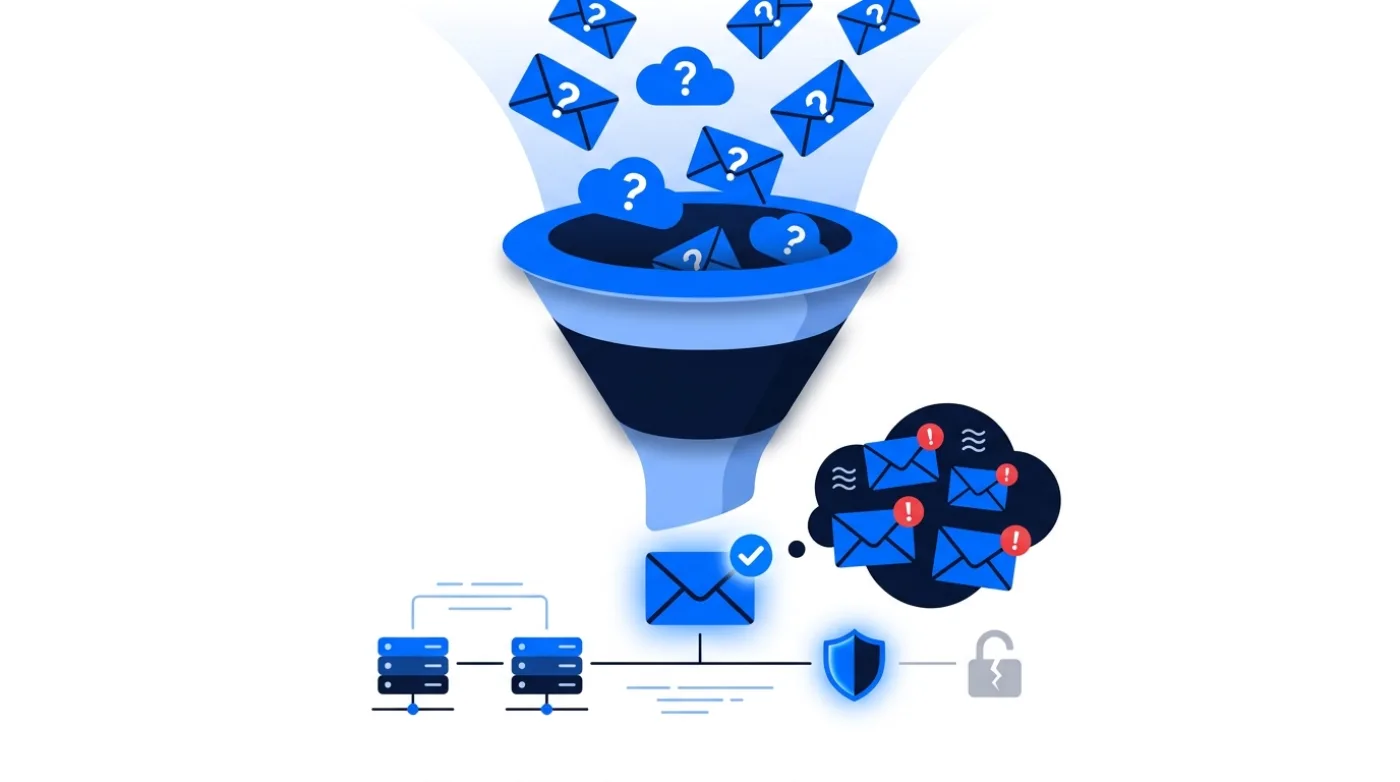
Run any B2B list through a verifier and 10 to 25% comes back "catch-all" or "risky." Delete them all and you lose real prospects; send to all and you eat bounces. Understanding the catch-all email is how you make that call correctly. Here is the framework.
What a catch-all domain is
Normally a mail server rejects messages to nonexistent mailboxes, which is exactly how SMTP verification confirms an address exists. A catch-all server accepts mail for every address at the domain, real or not. The verifier connects, asks, and gets "sure, send it" regardless, so existence cannot be confirmed. That is why it is labeled risky, not invalid.
Why companies run catch-all
To never miss a misspelled email, to route former employees' mail, or simply as a hosting-panel default. It correlates with smaller and mid-size companies, which is precisely the segment most cold outbound targets, hence the 10 to 25% share on typical lists.
The send or skip framework
- Send if: the contact data is fresh (found this quarter), the person is verifiably at the company (active LinkedIn), and the account matters to you.
- Skip if: the data is old, the person's tenure is unclear, or your domain is young with fragile reputation.
- Portfolio rule: keep catch-alls under 20% of any single campaign so a bad batch cannot push bounces past 2%.
The pattern cross-check trick
If two contacts at the same catch-all domain both match the company's known email pattern (verify a colleague whose address IS confirmable), confidence rises meaningfully. Pattern match plus a fresh LinkedIn profile means send. More on finding patterns in this guide, and on bounces in the bounce rate guide.
FAQ: catch-all emails
What does a catch-all email result mean?
The domain accepts mail for any address, so the verifier cannot confirm the specific mailbox exists. It is labeled risky.
Should I email catch-all addresses?
Only when the contact data is fresh and the account matters, and keep them under 20% of any campaign.
Why are so many B2B emails catch-all?
Smaller and mid-size companies often run catch-all domains by default, and they are common cold email targets.
Can I verify a catch-all address for sure?
No verifier can confirm a mailbox on a catch-all domain. Use the pattern cross-check to raise confidence instead.