ON THIS PAGE
By Efe Berke Colaker, Founder at GetleadReviewed by the Getlead editorial team for accuracy. Last updated August 2026.
Managed services is not sold on features. Companies switch IT providers when something happens, and the rest of the time they stay because switching feels expensive.
That makes MSP outbound a timing exercise, and timing is a data problem before it is a copy problem.
The events that open the door
The last row is the most actionable and the least used. A company advertising for its only IT hire has a coverage gap right now, and it is public.
For example, a 70 person firm posting for a systems administrator after their previous one left is deciding between hiring and outsourcing that month, and almost nobody writes to them about it.
Segmenting by who decides
Headcount predicts the buyer better than industry does, and it changes the message entirely.
- Under 50 employees: the owner or the finance lead decides, and the argument is risk and time.
- 50 to 250: an operations or IT manager owns it, and the argument is capacity and coverage.
- Above 250: an internal team exists, so the sale is co managed services rather than replacement.
- Regulated sectors: compliance owns the timeline regardless of size.
Writing the wrong argument to the wrong band is the most common waste here. A capacity argument to a 30 person company means nothing, because they have no capacity to compare it against.
The shape of the outbound
- Build the segment from triggers first, headcount second, geography third.
- Resolve the named decision maker, since IT decisions rarely start at a shared inbox.
- Verify addresses in the week you send.
- Write to the event, not to the category of service.
- Expect a long tail: some replies arrive months later when the trigger repeats.
That last point changes how you judge a campaign. In a trust purchase with switching costs, a polite not now is a real outcome, and the record should be parked with a date rather than discarded.
Credibility without naming clients
Many MSP clients will not be named publicly, which removes the usual proof mechanism.
Use specifics that do not require a logo: response times you commit to, the size and sector of a comparable client described generically, or a concrete first step such as a review of their backup and recovery position.
Sources and method
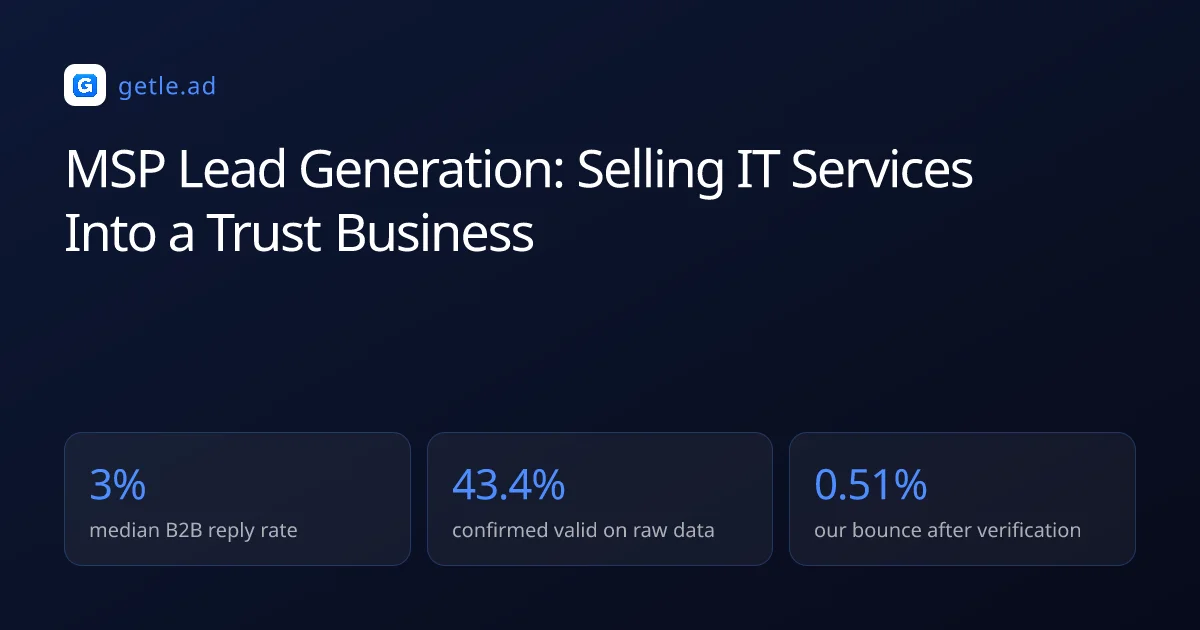
First-party data (Getlead, 2026): the verification split of 43.4% confirmed valid, 23.9% invalid, 16.7% catch-all and 16.0% unknown comes from 383,368 addresses analyzed through live SMTP verification, and the 0.51% bounce rate comes from 34,973 tracked sends, aggregated and anonymized at campaign level. Full method in our cold email benchmark study.
External sources: median B2B reply rates near 3% and the finding that roughly 42% of replies arrive from follow-ups come from 2026 cold email benchmark compilations; US commercial email obligations come from the FTC CAN-SPAM compliance guide.
Third party benchmarks vary by market and methodology and should be read as directional. Checked in August 2026.
Frequently asked questions
What triggers MSP switching?
Events rather than pitches: a security incident or outage, a compliance deadline, rapid headcount growth, a new site, or losing the internal IT person. Between events, switching costs keep companies with their current provider.
How should MSPs segment prospects?
By headcount before industry. Under 50 employees the owner or finance lead decides on risk and time, between 50 and 250 an ops or IT manager decides on capacity, and above 250 the sale becomes co managed rather than replacement.
What is the most actionable public signal?
A company advertising for its only IT hire. It shows a coverage gap right now, it is public and dated, and almost nobody writes to those companies about outsourcing the same function.
How long are MSP sales cycles?
Long enough that a not now is a real outcome rather than a rejection. Park those records with a date and expect replies months later when the trigger repeats, which changes how a campaign should be judged.
How do MSPs build credibility without naming clients?
With specifics that do not require a logo: committed response times, a comparable client described by size and sector, or a concrete first step such as reviewing their backup and recovery position.
Does data quality matter for long cycles?
More, not less. Records sit unused between triggers and decay at roughly 2% a month, so verify in the week you send rather than relying on the check made when the list was built.