ON THIS PAGE
By Efe Berke Colaker, Founder at GetleadReviewed by the Getlead editorial team for accuracy. Last updated August 2026.
A prospect asks three suppliers for a quote on "B2B data services" and gets back a per record list price, a monthly platform subscription and a managed retainer. All three answered the question honestly. They are simply selling different things, and the buyer has no way to compare the quotes.
B2B data services are the outsourced supply of company and contact data: sourcing it, filling gaps in it, proving it is deliverable, or running outreach on it for you. That breadth is the actual problem in this market. The categories below sort it out, and the evaluation framework after them gives you numbers you can put side by side, including the ones suppliers would rather quote from their own sample.
We run verification at scale, so where a claim can be checked against our own data we show the check rather than the claim.
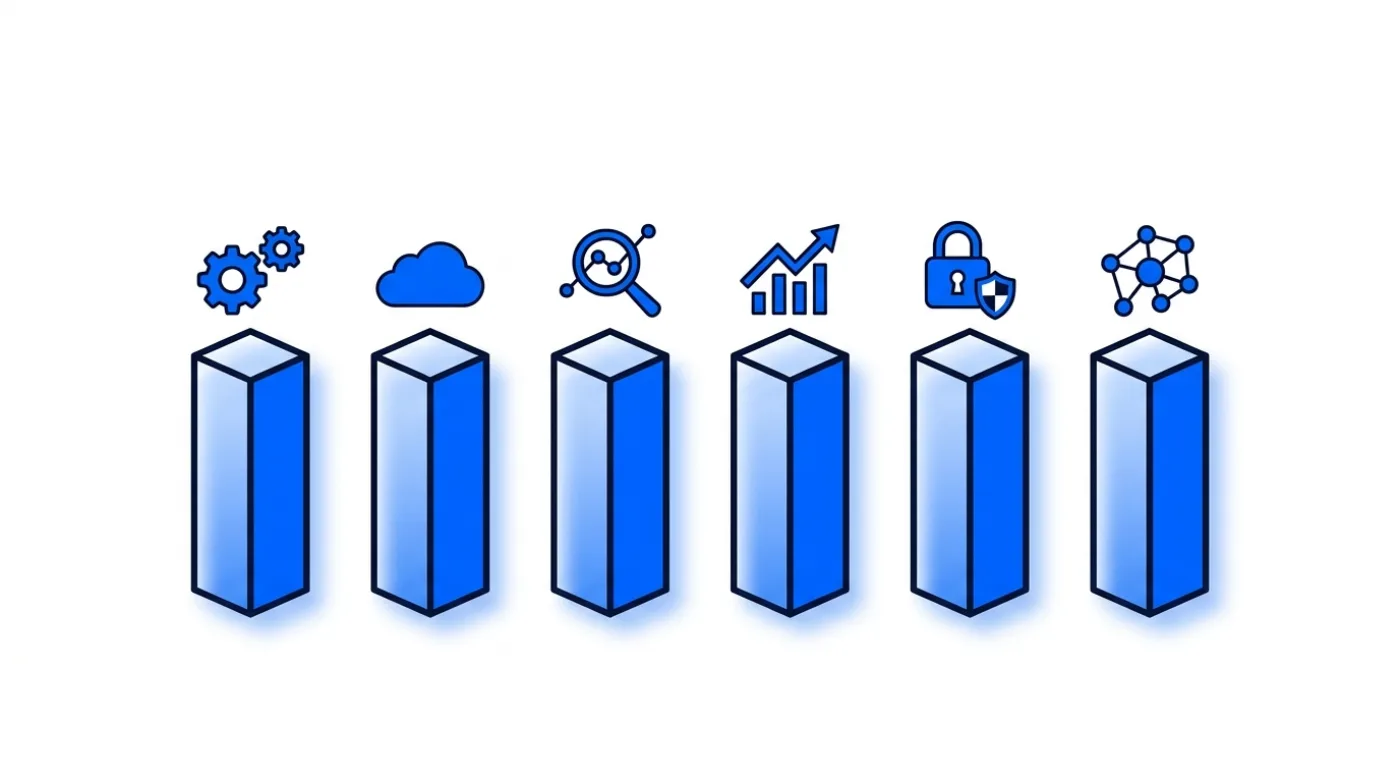
The six categories hiding behind one phrase
Each of these solves a different problem, and each fails differently. Name the category before you name a budget.
The category most teams actually need
Most teams asking for list building need verification and segmentation instead. They already hold more records than they can work. Buying more contacts when 40% of the existing file is unsendable adds volume to a problem that is about quality, and the invoice arrives either way.
The four metrics that separate suppliers
Every supplier will tell you they are 95% accurate. Accuracy is not a measurable claim without a definition, a sample and a date, so replace it with four things you can actually test.
- Match rate on your file: give them 500 of your own records with the email column removed and see how many they return correctly. This is the only fair test, because it runs on data you can grade.
- Coverage of your ICP: how many accounts they hold in your exact segment, not their total database size. A 700 million record index with thin coverage of Nordic manufacturing is a small database for a Nordic manufacturing seller.
- Refresh cadence per record: ask for a last verified timestamp on individual records. A file level date means the file was assembled then, not checked then.
- Provenance evidence: where each record came from, and a data processing agreement to sign. Suppliers who cannot answer this cannot help you answer it either.
Use the third metric as a tiebreaker on price. A supplier that re-verifies monthly is selling a different product from one that refreshes annually, even where the export looks identical. Because contact data decays at roughly 2.1% a month and compounds to about 22.5% a year.
Provenance is a legal requirement, not a nicety
If any of the records are EU based, the obligation to tell people where their data came from sits with you, not the supplier. Article 14 of the GDPR requires notice when personal data is obtained from a third party rather than the person themselves. And you cannot give that notice if your supplier will not tell you the source.
This turns a vague procurement preference into a hard filter. A supplier that cannot evidence sourcing is not merely lower quality, it makes a compliance position you may have to defend impossible to construct. Treat the data processing agreement as a gate rather than paperwork at the end.
Grade the sample yourself
Run the returned sample through an independent verifier and record the four states separately: confirmed valid, catch-all, invalid, unknown. A supplier scoring materially better than the 43.4% baseline we see on raw data is adding real value. A supplier landing near it is reselling the open web with a logo on top.
How data services price, and where the surprises hide
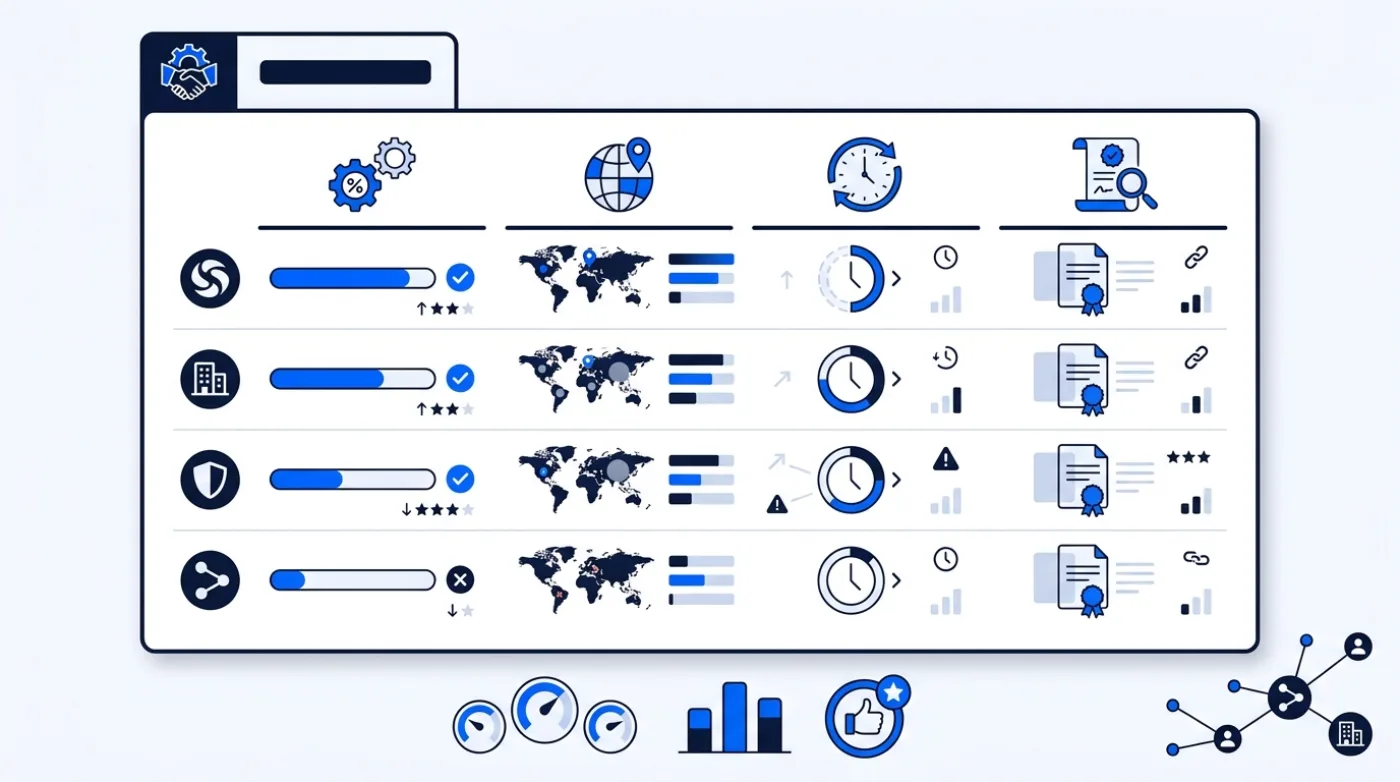
Four pricing models dominate, and each has a failure mode worth knowing before the contract rather than after.
- Per record: transparent, but you pay for invalid records too unless the contract says otherwise. Negotiate a credit for anything that fails verification.
- Credits: flexible, and the failure mode is burned credits on reveals that return nothing usable. Ask precisely what consumes a credit.
- Per seat: predictable, and punishes teams whose prospecting is bursty. Apollo publishes $59, $99 and $149 per user per month across its tiers.
- Enterprise annual: coverage and support, at a level that needs justifying. ZoomInfo's Professional plan starts around $14,995 a year for three seats, with median signed contracts nearer $31,875.
Two clauses do most of the damage in annual agreements. Auto renewal windows that close before you have run a full quarter of data. And credit expiry that resets unused balance at each period boundary. Both are negotiable and neither gets negotiated if you do not raise them.
For a like for like breakdown of what each of the large providers charges and what you get at each tier, the provider comparison has the current numbers.
Telling a supplier from a reseller
A large share of the market resells the same underlying data. Resale is not automatically bad, but you should know when you are paying a margin on a file that forty other buyers already have. Because your prospects have already received those forty campaigns.
The catch-all signal deserves special attention. Catch-all domains accept every address at the mail server and confirm nothing, so aged and speculative data hides there. In our data 16.7% of raw records land in that state. A supplier sample running far above that is largely guesses about what an address pattern might be.
Nine questions to ask before you sign
Send these verbatim. The answers, and how fast they arrive, sort a shortlist faster than any demo.
- How many contacts do you hold that match this exact ICP definition, and how did you count them?
- What is your match rate on a 500 record file we supply, and will you run it as a paid test?
- Do individual records carry a last verified timestamp, and can we see it in the export?
- What are your data sources, and can you evidence the lawful basis for the EU records?
- What consumes a credit, and what happens when a reveal returns nothing?
- Do you replace or credit records that fail third party verification?
- How often is the index refreshed, and is that a full re-verification or a re-crawl?
- Will you sign a data processing agreement, and who are your sub processors?
- What are the renewal terms, the notice window and the treatment of unused credits?
Question two is the one that matters most and the one most often deflected. If a supplier will not test on your data, you are being asked to buy on a sample they controlled. That tells you about their best data rather than their average data.
When a service beats software, and when it does not
A managed service is worth paying for when the constraint is people rather than tooling. If nobody owns list building, a retainer buys you an owner. If someone owns it and the bottleneck is coverage or verification throughput, software is cheaper and you keep the asset.
The test that decides it
Ask who keeps the data when the contract ends. Managed prospecting engagements frequently keep the list on the agency side, which means the pipeline stops with the retainer and you rebuild from zero. That is not a reason to avoid services, it is a reason to write ownership into the agreement.
The in-house cost nobody counts
Building lists in-house is rarely free, it is just billed differently. A rep spending six hours a week on sourcing and verification is roughly 300 hours a year. That at any realistic loaded cost exceeds most annual data subscriptions before a single meeting is booked.
That comparison, rep hours against subscription cost, is the honest version of the build versus buy debate. It usually favours tooling for volume work and favours people for the judgement calls: defining the ICP, choosing the signal, writing the first line that makes the segment worth sending to.
The middle path most teams end up on: software for data, verification and sending, with a specialist brought in for a defined project such as a CRM hygiene pass or a market entry list. That keeps the recurring cost predictable and the asset in your control.
Whichever route you take, judge on the four metrics and test on your own records. The suppliers worth having are the ones that welcome the test, and there are fewer of them than the category's marketing suggests.
Sources and method
First-party data (Getlead, 2026): the verification split of 43.4% confirmed valid, 23.9% invalid, 16.7% catch-all and 16.0% unknown comes from 383,368 addresses analyzed through live SMTP verification. The 0.51% bounce rate and 35.8% open rate come from 34,973 tracked sends. Both are aggregated and anonymized at campaign level, and the full method is published in our cold email benchmark study.
External sources: contact decay of 2.1% a month compounding to 22.5% a year (HubSpot database decay model, built on MarketingSherpa research); the average cost of poor data quality at $12.9 million a year (Gartner, 2020); bulk sender requirements including the 0.3% spam complaint ceiling and one click unsubscribe (Google Workspace sender guidelines, 2026); CAN-SPAM obligations for commercial email (FTC compliance guide); and legitimate interest as a lawful basis (GDPR Article 6).
Pricing figures for third party tools are public list prices checked in August 2026 and change without notice. Where a vendor does not publish pricing we say so rather than estimate. If you find a number here that has moved, tell us and we will correct it.
Frequently asked questions
What are B2B data services?
It is an umbrella term for six distinct products: list building, enrichment, verification, intent and signal data, CRM hygiene, and managed prospecting delivered as a service. They solve different problems and price differently, so identifying the category you need is the first step in any evaluation.
How do I evaluate a B2B data supplier?
Test four things: match rate on a file you supply, coverage of your exact ICP rather than total database size, per record refresh timestamps. And evidence of provenance with a data processing agreement. Single number accuracy claims are not testable and should not decide a purchase.
How much do B2B data services cost?
List building runs about $0.02 to $0.30 per record, enrichment $0.05 to $0.50 per row, verification $0.001 to $0.01 per check, intent data $10,000 or more per year, and managed prospecting $2,000 to $10,000 per month. Per seat platforms publish rates such as Apollo at $59 to $149 per user per month. While ZoomInfo's Professional plan starts near $14,995 a year.
How can I tell if a data supplier is just reselling?
Look for an unusually high catch-all share in a paid sample, accuracy claims with no definition or date, refusal to test on your own records, file level rather than per record refresh dates, and no data processing agreement. Our verification data puts catch-all at 16.7% of raw records, so a sample far above that suggests aged or speculative data.
Is a managed prospecting service better than software?
It is better when the missing resource is a person to own list building. It is worse when you already have an owner and the constraint is coverage or verification throughput. Because software costs less and you keep the asset. Always check who owns the data when the engagement ends.
What is a good match rate for enrichment?
Judge it against the baseline rather than a target. In our verification of 383,368 raw B2B addresses, 43.4% were confirmed valid. A service returning materially better than that on your own test file is adding value. And one landing near it is largely returning what public sources already offer.