ON THIS PAGE
By Efe Berke Colaker, Founder at GetleadReviewed by the Getlead editorial team for accuracy. Last updated August 2026.
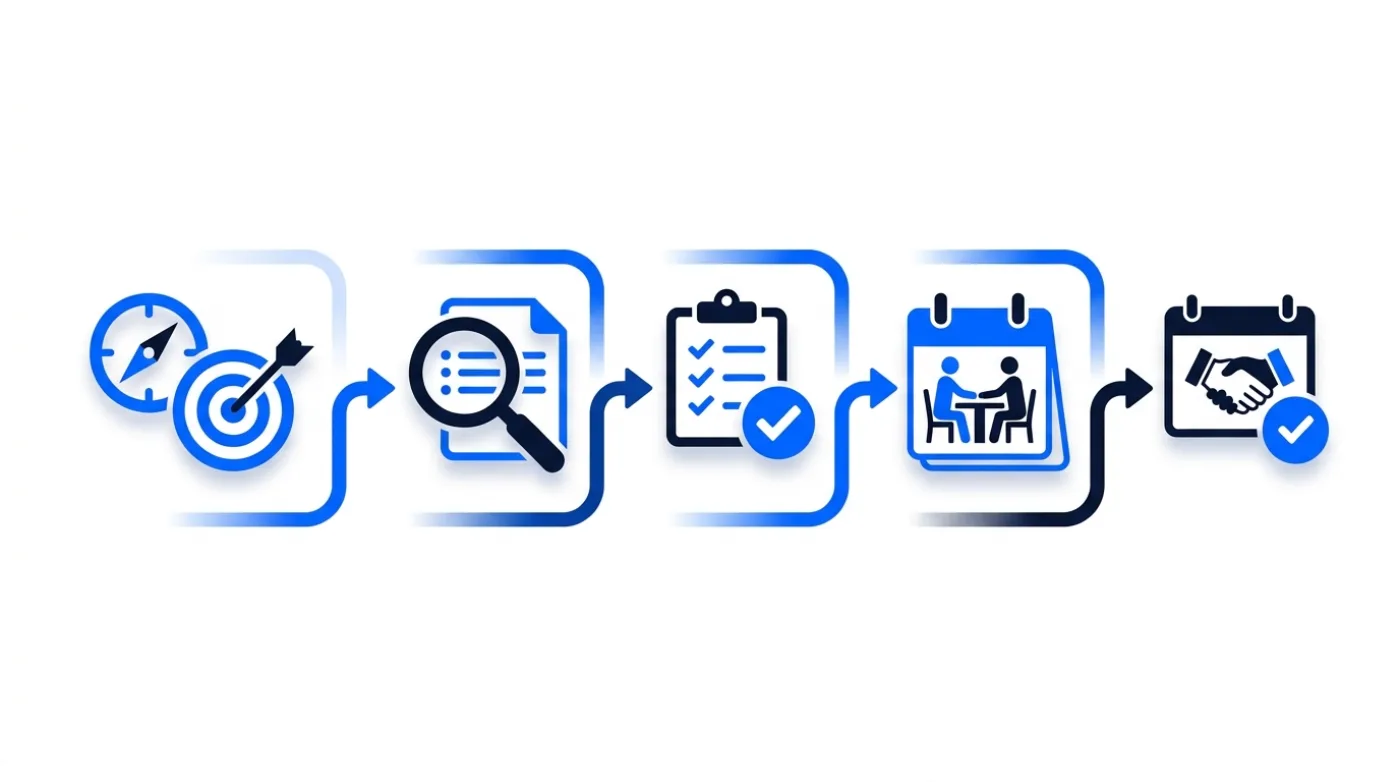
B2B email lead generation is the practice of sourcing contacts that match a defined ICP, verifying their addresses, and running sequenced outbound email to start conversations. It fails in a predictable order. The list is bought and never verified, the domain is new and never warmed, the sequence is one email with no follow-up, and the post mortem blames the copy. Copy is almost never the binding constraint.
What follows is the system in the order it has to be built, with real numbers at each stage: our own verification and send data from inside Getlead, plus published benchmarks where our data does not reach. Every stage has a gate, and skipping a gate is what produces the failure that gets blamed on the next stage.
Start from the meetings and work backwards
Nearly every outbound plan starts with a sending number. That is the wrong end. Start with the meetings you need, apply realistic conversion at each step. And the volume falls out of the arithmetic instead of out of the air.
A worked plan for two meetings a week
- Target: 8 meetings a month.
- Roughly a third of positive replies convert to a booked call, so you need about 24 replies.
- At a median B2B reply rate near 3%, that is about 800 contacts reached.
- Deliverability is not free: plan for the roughly 43% of raw records that survive verification, so source about 1,900 raw records.
- Spread across a month, that is a manageable daily volume rather than a spike that trips filters.
Median reply rates in 2026 sit near 3%, with strong campaigns in the 5% to 8% range and tightly targeted small sends reported considerably higher. Plan on the median. If your segments and copy are better than median, you find out as upside rather than as a missed quarter.
Stage 1: define an ICP that can be filtered
An ICP that cannot be expressed as database filters is a positioning statement, not a targeting instruction. "Ambitious mid market companies that value efficiency" cannot be queried. Employee count between 20 and 200, in these four industries, in these three countries, with an operations lead in place, can be.
Write the ICP as the filter set you will actually apply, then add one situational signal that makes the timing right: hiring for a role your product supports, recently funded, running a competing tool, opening a new market. The signal is what turns a plausible recipient into a relevant one.
One segment at a time
Running four segments at once from a standing start produces four underpowered tests and no learning. Run one segment until you have a reply rate you trust, then branch. The teams that scale outbound fastest are usually the ones that started narrowest.
Stage 2: source the list without importing the decay
Three sourcing routes, and they mix well: a database you subscribe to, scraping public sources where the signal lives, and enrichment of accounts you already know about. What matters is not the route but what arrives with the record.
- Source and date on every record. Without this you cannot audit quality or answer where the data came from.
- Canonical domain as the key. Company name strings duplicate silently and inflate the list you think you have.
- Role level normalized on import. Titles are chaos across companies, and segments built on raw title strings leak.
- No consumer domains. Personal mailboxes are out of scope for B2B outreach and drag complaint rates up.
Contact data decays around 2.1% a month, compounding to roughly 22.5% a year. So a list assembled six months ago is materially different from the one you exported today. Source close to the send date rather than building a large stock of records you will work through slowly.
Stage 3: the verification gate
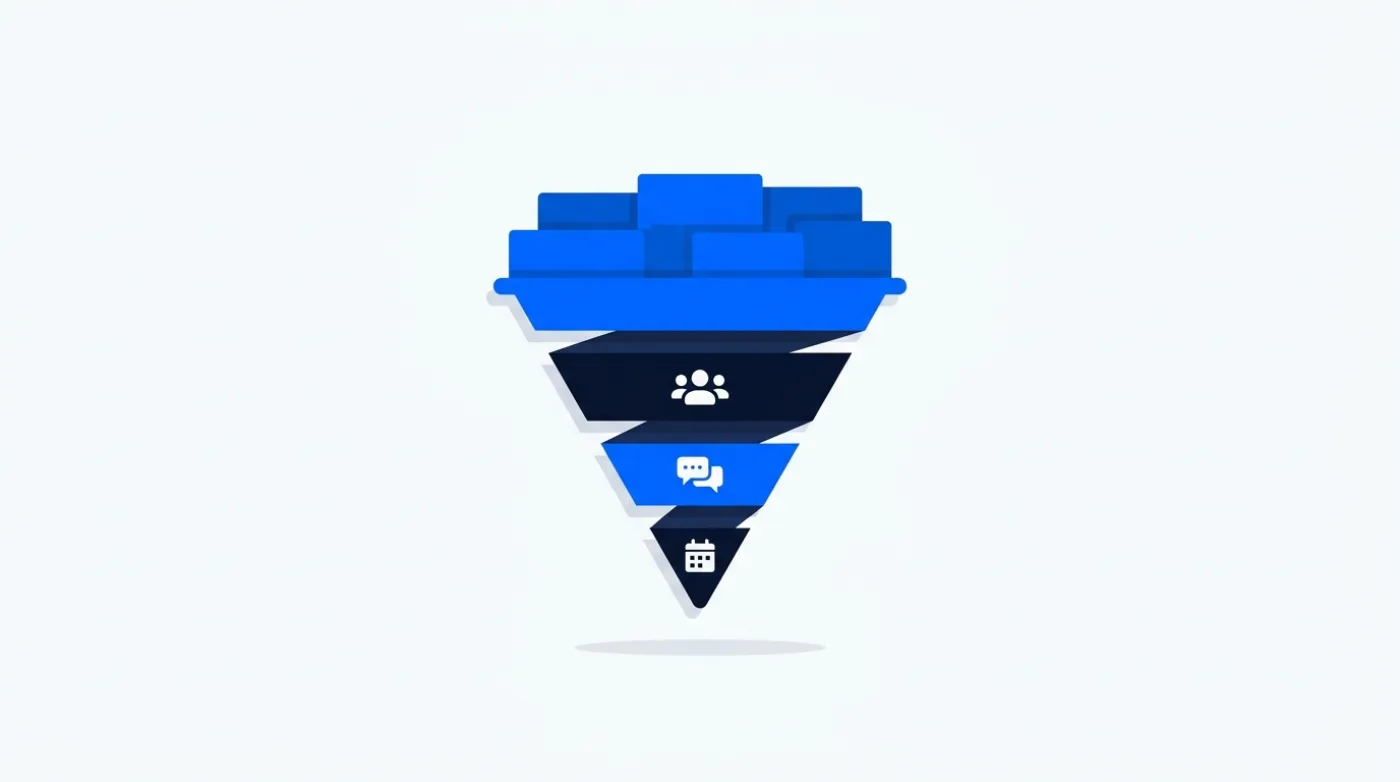
This is the stage that decides whether the rest of the system works. Here is what raw B2B data looks like when it hits live SMTP verification in our platform, across 383,368 addresses.
Just under a quarter of records point at a mailbox that does not exist. Send to them and every one is a hard bounce charged directly against your sender reputation. In our send data, campaigns to verified lists bounced at 0.51% against the roughly 3% level where reputation damage begins, which is about a six times safety margin.
Verify at the point of export and again before each send if the segment has been sitting. Verification is cheap, typically a fraction of a cent per check. And it is the only step in this system that protects every step after it.
Confirmed valid is the verification state where the receiving server accepted the recipient, and it is the only state safe to send to at volume.
Stage 4: sending infrastructure that survives 2026
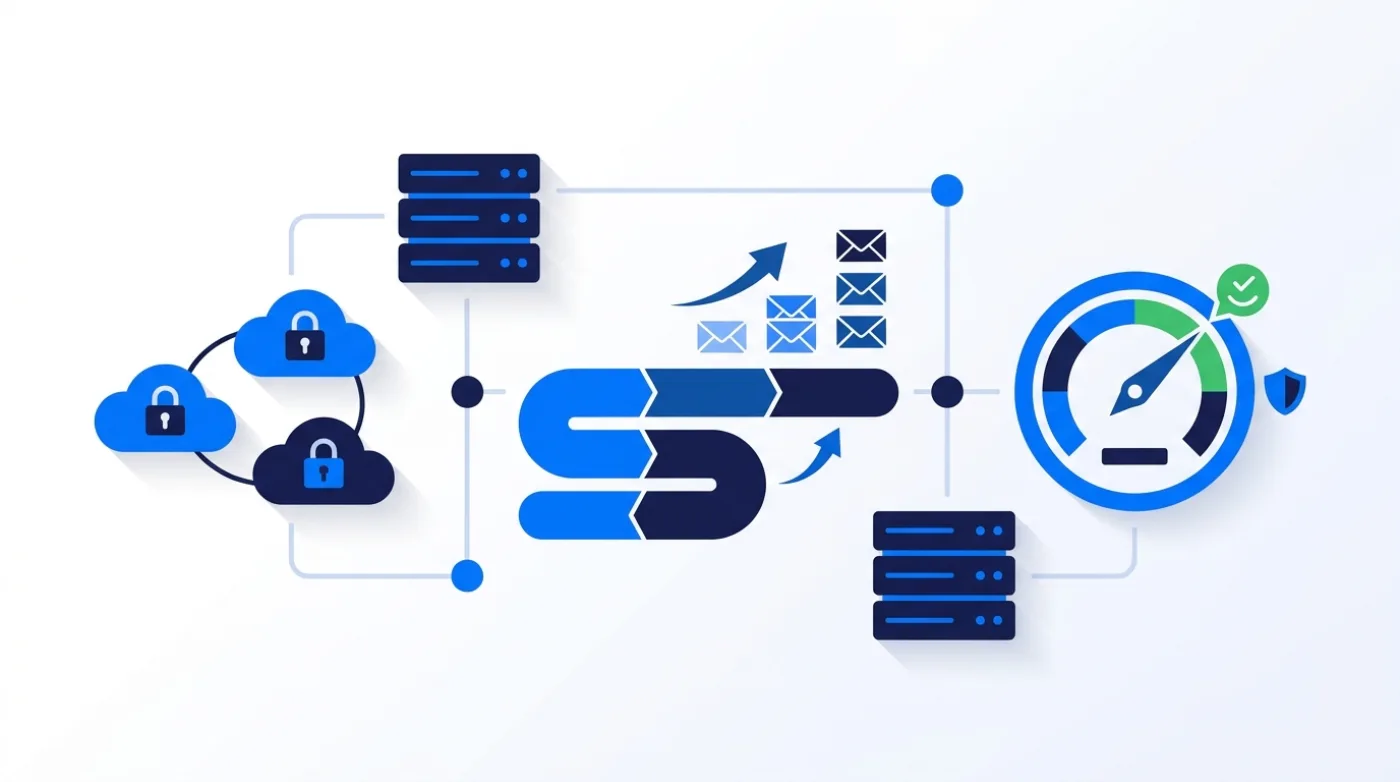
The mailbox providers stopped being lenient. Gmail and Yahoo set bulk sender requirements in 2024, and Microsoft aligned in May 2025 with a 550 5.7.515 rejection for non compliant senders. Three things are now non negotiable at volume.
- Authentication: SPF, DKIM and DMARC configured on the sending domain, with DMARC at least at p=none.
- A spam complaint rate under 0.3%, with 0.1% as the operational target. Three complaints per thousand emails reaches the ceiling.
- One click unsubscribe under RFC 8058 for marketing mail, honored within 48 hours.
Publishing the three authentication records is a one hour job that most stalled programs have never completed. And no amount of copy work compensates for missing them. Get them in place before the first campaign, not after the first deliverability problem.
Use a separate domain for outbound rather than your primary corporate domain, warm it before it carries volume, and keep per mailbox daily volume conservative. Warm-up is not a growth hack, it is how a new domain acquires the sending history that filters look for.
Why several mailboxes beat one
A single mailbox pushed hard looks exactly like the pattern filters are built to catch. Several mailboxes on a couple of secondary domains, each sending a modest daily volume, produce the same monthly total with a very different risk profile. And one flagged mailbox no longer stops the program. Standing several mailboxes up at once is where the warm-up wait bites hardest, and where pre-warmed inboxes save the most calendar.
It also isolates blast radius. If a segment turns out to generate complaints, the damage is contained to the mailbox that sent it rather than to the domain your invoices and support replies go out from.
Capacity planning follows from this. If the plan needs 1,900 records a month, that is a modest daily volume spread across a small number of warmed mailboxes, not a single mailbox pushed to its limit. The volume planner walks through the mailbox math.
A bulk sender is any domain sending at the volume where Gmail, Yahoo and Microsoft enforce authentication and complaint thresholds.
Stage 5: the sequence, and the follow-up that carries it
Most of the return in an email sequence comes from messages two and three, and most teams never send them. Published analyses put roughly 42% of all replies as coming from follow-ups, with close to half of reps sending none at all.
Structure the sequence around new information rather than repetition. A follow-up that says "just bumping this" adds nothing and invites the complaint that costs you 0.3% headroom. A follow-up that adds a relevant proof point, a different angle on the problem, or a smaller ask is a genuine second attempt.
Personalization at the level that pays
Personalization that references a company detail anyone could scrape reads as automation, because it is. Personalization tied to the situational signal from stage one reads as research. That is the difference between a merge field and a reason to reply. And reported reply lifts from signal based personalization are large enough to justify the extra minute per segment.
What to measure, and what to ignore
Open rate has been an unreliable metric since Apple Mail privacy protection started auto opening messages. Across 34,973 tracked sends in our data the average open rate was 35.8%. That is a number worth watching for anomalies and worth ignoring for decisions.
Judge segments on positive replies, not on replies. A segment that produces high total replies and no interest is telling you the targeting is wrong while looking like a success in the dashboard. Track meetings booked per thousand verified contacts and the noise disappears.
The four ways this system breaks
In roughly the order we see them cause damage.
None of these are copy problems, which is where most post mortems land. The system is data first, infrastructure second and message third. And fixing them out of order is why so many outbound programs stall at the same place.
If you are starting from a raw file today, the sequence is clean it, verify it, segment it, then send. The list cleaning guide covers that first pass in order.
Sources and method
First-party data (Getlead, 2026): the verification split of 43.4% confirmed valid, 23.9% invalid, 16.7% catch-all and 16.0% unknown comes from 383,368 addresses analyzed through live SMTP verification. The 0.51% bounce rate and 35.8% open rate come from 34,973 tracked sends. Both are aggregated and anonymized at campaign level, and the full method is published in our cold email benchmark study.
External sources: contact decay of 2.1% a month compounding to 22.5% a year (HubSpot database decay model, built on MarketingSherpa research); the average cost of poor data quality at $12.9 million a year (Gartner, 2020); bulk sender requirements including the 0.3% spam complaint ceiling and one click unsubscribe (Google Workspace sender guidelines, 2026); CAN-SPAM obligations for commercial email (FTC compliance guide); and legitimate interest as a lawful basis (GDPR Article 6).
Pricing figures for third party tools are public list prices checked in August 2026 and change without notice. Where a vendor does not publish pricing we say so rather than estimate. If you find a number here that has moved, tell us and we will correct it.
Frequently asked questions
What is B2B email lead generation?
It is the process of sourcing companies and contacts that match a defined ICP, verifying their email addresses. And running sequenced outbound email to convert them into conversations. It is a system with five dependent stages: ICP definition, sourcing, verification, sending infrastructure and sequence design.
How many emails do I need to send to book a meeting?
Work backwards. At a median reply rate near 3% and roughly a third of positive replies converting to calls, eight meetings a month needs about 800 contacts reached. Because only about 43% of raw records survive verification in our data, that means sourcing roughly 1,900 raw records a month.
What is a good bounce rate for B2B email campaigns?
Under 1%. Sends to SMTP verified lists in our data bounced at 0.51%, while around 3% is where sender reputation starts to suffer. Bounce rates above that usually mean the list was never verified rather than that the copy or timing was wrong.
What are the 2026 sender requirements for cold email?
Gmail, Yahoo and Microsoft require SPF, DKIM and DMARC on domains sending at volume, a spam complaint rate below 0.3%. And one click unsubscribe under RFC 8058 for marketing mail honored within 48 hours. Microsoft enforces with a 550 5.7.515 rejection for non compliant senders.
How many follow-ups should a cold email sequence have?
At least two, ideally three, each adding new information rather than repeating the first message. Published analyses attribute roughly 42% of all replies to follow-ups. While close to half of reps send none, which makes it the cheapest available improvement for most teams.
Why is my open rate high but my reply rate near zero?
Open rates are inflated by privacy features that auto open messages, so a high number can be an artifact rather than interest. Our data shows a 35.8% average open rate across 34,973 sends. Treat opens as diagnostic and judge campaigns on positive replies and meetings booked per thousand verified contacts.