ON THIS PAGE
By Efe Berke Colaker, Founder at GetleadReviewed by the Getlead editorial team for accuracy. Last updated August 2026.
Cognism sits at the enterprise end of the contact data market, and the first thing anyone notices is that there is no pricing page.
That is a deliberate model rather than an oversight, and it means every figure in public is a report from a buyer or a procurement platform rather than a rate card.
How the pricing is actually structured
Two components, and confusing them is why quotes surprise people.
Procurement sources describe a platform fee plus per user licensing with annual contracts, and report per user costs near $1,500 a year on lower tiers and $2,500 on higher ones.
A platform fee is the cost of access before anyone logs in, which is why small teams see a high cost per user and large teams see it fall.
What inflates the number after the first quote
The gap between quoted and paid is where most of the complaints in this category live.
- Onboarding fees, reported in the several hundred to low thousands.
- Intent topics, priced individually rather than bundled.
- Seat creep, since the model scales with headcount rather than usage.
- Renewal uplifts, with annual increases in the ten to fifteen percent range reported by buyers.
- Export limits, which convert a data need into a tier upgrade.
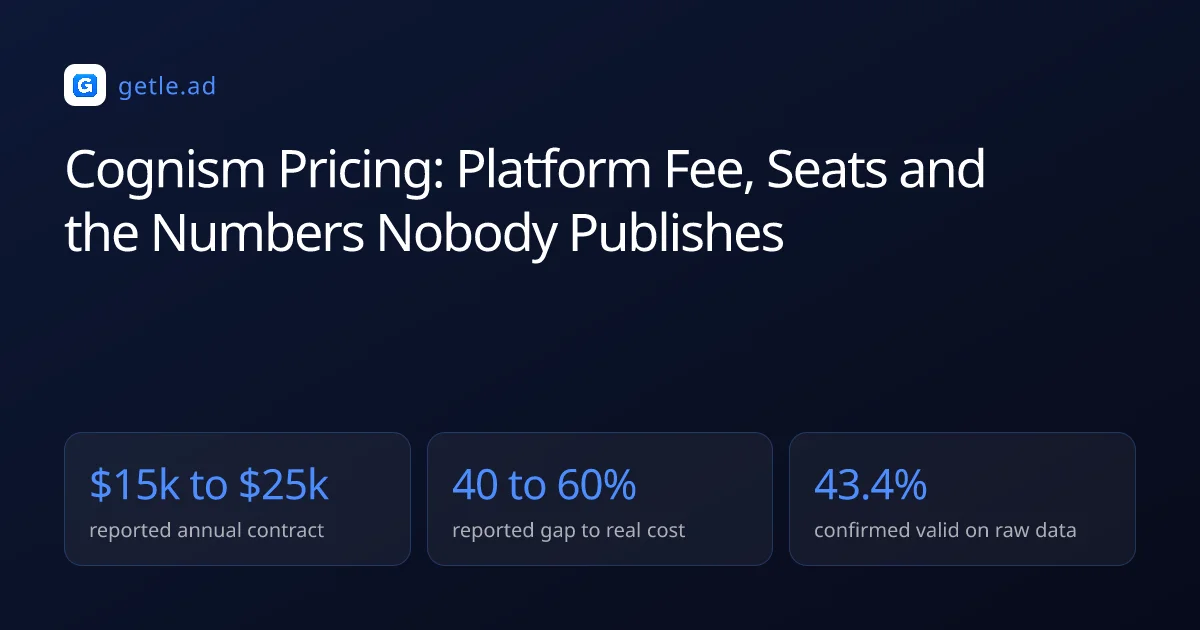
One analysis puts the real cost 40 to 60% above the initial quote once these are included, which is the number to plan against rather than the headline.
For example, a $18,000 quote for six seats becomes materially different once onboarding, two intent topics and a first renewal are added, and none of that appears in the initial conversation.
What the premium actually buys
The price is defensible for a specific requirement, and indefensible outside it.
If your motion is email only, most of that value is inaccessible. Verified mobile data is expensive to produce, and you are paying for the production whether or not you dial.
Negotiating a private quote
When there is no rate card, the leverage is information and timing rather than volume.
- Ask for the platform fee and the seat price separately, since only one of them scales with your team.
- Get export limits in writing, because a limit is a future upgrade in disguise.
- Request the renewal uplift cap as a contract term rather than an assurance.
- Time the conversation near a quarter end, which is when flexibility appears.
- Run a trial against your own segment and measure match rate, not database size.
The last point decides whether the rest matters. A database of any size is worth nothing on the accounts you actually sell to if coverage there is thin.
When a cheaper stack answers the same need
Enterprise data pricing assumes an enterprise problem. Several common requirements do not qualify.
A team that needs a filtered segment, verified email addresses and a sending tool is describing a flat subscription, not a platform fee plus seats.
The economics only invert when phone contact is central, when European compliance posture is a procurement requirement, or when a large team makes the per seat model work in your favour rather than against it.
Sources and method
First-party data (Getlead, 2026): the verification split of 43.4% confirmed valid, 23.9% invalid, 16.7% catch-all and 16.0% unknown comes from 383,368 addresses analyzed through live SMTP verification, and the 0.51% bounce rate comes from 34,973 tracked sends, aggregated and anonymized at campaign level. Full method in our cold email benchmark study.
External sources: platform fee plus seat structure, the reported $15,000 to $25,000 contract range, per user estimates and the 40 to 60% gap between quote and real cost come from 2026 procurement analyses and vendor comparison research.
Prices change without notice and published tiers are frequently renegotiated in practice, so treat every figure here as a starting point for your own quote rather than a fixed rate. Checked in August 2026.
Frequently asked questions
How much does Cognism cost?
Cognism does not publish pricing. Third party procurement sources report contracts commonly between $15,000 and $25,000 a year, built from a platform fee plus per seat licensing at roughly $1,000 to $1,500 per user annually on lower tiers.
Why does Cognism not publish prices?
Because the model is a platform fee plus per user licensing negotiated per deal, with annual commitments standard. Every published figure is a report from a buyer or a procurement platform rather than a rate card.
What makes the final invoice higher than the quote?
Onboarding fees, intent topics priced individually, seat creep as headcount grows, renewal uplifts reported in the ten to fifteen percent range, and export limits that turn a data need into a tier upgrade. One analysis puts the real cost 40 to 60% above the initial quote.
What is Cognism genuinely good at?
Phone verified mobile numbers and European coverage with a compliance posture built for that market, including do not call list flagging in supported countries. That is the differentiator the premium pays for.
Is Cognism worth it for email only outbound?
Usually not. Verified mobile data is expensive to produce and you pay for that production whether or not you dial, so an email centric team is funding infrastructure it never touches.
How do I negotiate a Cognism contract?
Ask for the platform fee and seat price separately, get export limits in writing, request a capped renewal uplift as a contract term, time the conversation near quarter end, and trial against your own segment measuring match rate rather than total database size.