ON THIS PAGE
By Efe Berke Colaker, Founder at GetleadReviewed by the Getlead editorial team for accuracy. Last updated October 2026.
Most outbound programs run on default settings, where SDRs load a list, pick a four-step template, and let it run. The sequence length is rarely tested against actual reply data from previous quarters to see what works. Reply timing follows a steep decay curve, meaning that sending six emails over forty days does not yield more meetings. It just burns your domain reputation faster while annoying your target market and generating spam complaints.
This post details how to structure your touchpoints based on actual reply patterns and strict deliverability constraints. We analyze exact send intervals, step counts, and the precise point where follow-ups become a spam risk. You must understand that every additional email sent to an unresponsive prospect carries a measurable mathematical cost. By optimizing your sequence duration, you protect your infrastructure while maintaining a predictable flow of qualified leads.
What is cold email sequence length?
Cold email sequence length is the total number of outbound messages sent to a single prospect and the calendar days spanning the campaign. It is not the word count of individual emails, but rather the architectural timeline of your entire outreach effort. A sequence stops when a prospect replies, bounces, or reaches the final scheduled step in your sending tool.
Many teams conflate sequence length with persistence, assuming a longer sequence catches prospects when they are finally ready to buy. Data shows the opposite behavior, as prospects categorise repeated unprompted emails as a nuisance rather than helpful persistence. The boundary of sequence length is domain health, because every email sent to an unengaged prospect increases risk. Once a domain hits a 0.3% complaint rate, Google and Microsoft route subsequent messages directly to the spam folder.
Therefore, sequence length is a risk management tool that balances late replies against the certainty of reputation damage. Every extra step multiplies the load on your sending infrastructure, forcing you to consume daily limits faster. A five-step sequence requires five times the daily sending capacity of a single-step campaign targeting the same list.
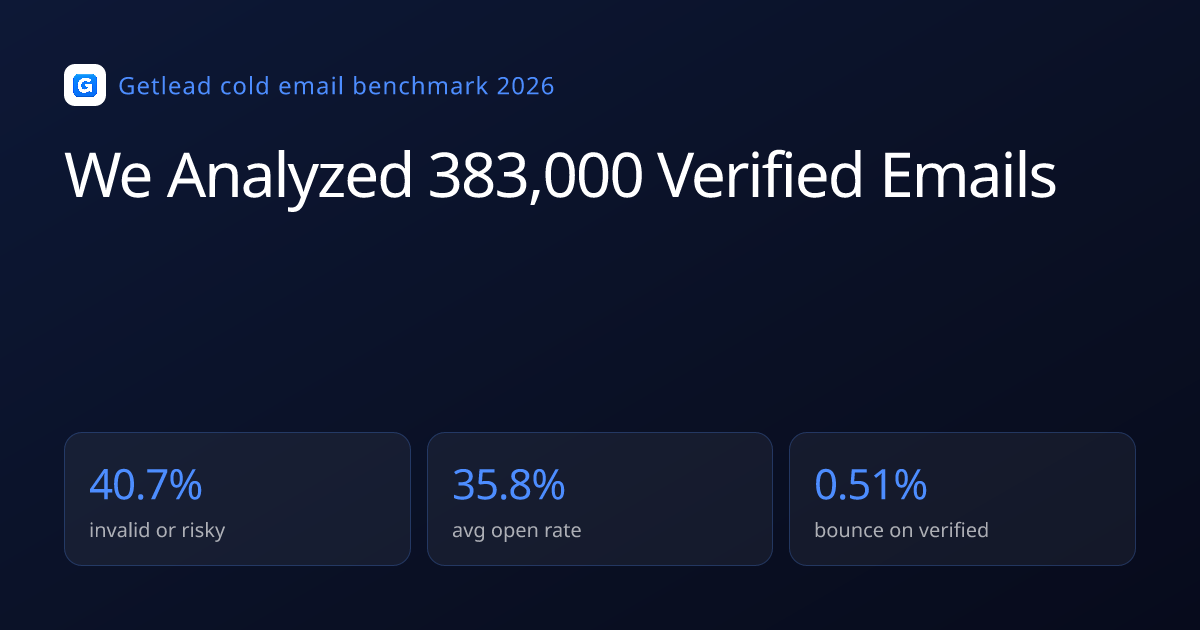
Our data shows that 16.7% of addresses are configured as catch-all domains by their IT departments. Sending a five-step sequence to a catch-all address is risky, because the receiving server might silently drop the messages. It might also log the repeated attempts as aggressive behavior, damaging your sender score over time. You waste valuable sending capacity on a black hole that will never yield a positive reply.
A worked example of sequence decay
For example, a SaaS company targeting HR directors builds a five-step sequence spanning twenty-one days of automated outreach. Step one goes out on day one, and step two follows on day four to establish a quick cadence. Step three arrives on day nine, step four hits on day fifteen, and the final step lands on day twenty-one. Suppose they enroll one thousand prospects into this campaign to test the effectiveness of their new messaging framework.
The first email generates twenty replies, the second email generates twelve replies, and the third email generates three replies. Steps four and five generate zero positive replies, but they trigger six spam complaints from frustrated recipients. Those six complaints push the sender over the safety threshold, sinking the domain reputation for future sends. The optimal sequence length for this specific campaign was exactly three steps delivered over nine days.
Cutting the last two steps sacrifices zero pipeline while preserving the sending domain for the next quarter. This pattern repeats across industries, proving that the bulk of positive responses arrive within the first two touchpoints. If you send step one on a Tuesday, step two lands on a Friday afternoon. Friday afternoons yield lower reply rates in B2B software sales, because buyers are wrapping up their week.
The prospect reads the email on their phone, dismisses it, and forgets it entirely by Monday morning. If you wait until the following Tuesday, you hit them when they are actively working at their desk. This is why calendar days matter just as much as the raw step count in your campaign settings. You must map the sequence length against the working week to maximize the visibility of each touchpoint.
Where teams get sequence pacing wrong
The most common error in outbound sales is the infinite follow-up loop that annoys potential buyers. Sales leaders often mandate eight to ten touchpoints based on outdated phone metrics from a different era. Cold calling requires multiple attempts to reach a connection, but an email lands in the inbox immediately. If a prospect reads an email and ignores it three times, the fourth email will not change their mind.
Another mistake is uniform spacing, where sending an email every three days trains the prospect to ignore you. Humans recognize automated patterns quickly, and a rigid three-day interval screams automation to any modern buyer. Teams also fail to segment their sequence length by prospect tier, treating every lead with the same cadence. Cold email to CEOs requires extreme restraint, because executives receive hundreds of pitches every single week.
It fails when it relies on automated nagging instead of providing immediate, concrete value. You must treat executive sequences as single-strike opportunities that demand your best copy upfront. First-party data reveals the cost of poor list hygiene when combined with excessively long email sequences. In our verification data, 23.9% of addresses were invalid, meaning they bounce immediately upon sending.
Sending a five-step sequence to an unverified list compounds the bounce rate five times over the campaign duration. A 0.51% bounce on verified lists keeps domains safe, while unverified lists destroy sender reputation permanently. Many SDRs use aggressive guilt trips in step four or five to force a response from the prospect.
“If your sequence relies on guilt-tripping a prospect in step five, you have already lost the deal. Professional buyers want clear value, not a manufactured relationship.”
VP of Sales at a 200-person SaaS
How to restructure your sequences this week
Audit your current sequences today by pulling the reply data for your last three major outbound campaigns. Count the positive replies generated by step four and beyond to see if they justify the sending risk. If the number is zero, delete those steps immediately to protect your domain from unnecessary spam complaints. Restructure your remaining steps using the 3-21-0 rule, which dictates three emails sent over twenty-one days.
The primary goal of this structure is to generate zero spam complaints while giving prospects time to respond. Step one introduces the specific problem, while step two provides a different angle or a concrete case study. Step three serves as a polite break-up email that closes the loop without using aggressive guilt trips. Adjust the timing to mimic human behavior by sending step two four days after the initial message.
- Send step one on Tuesday morning.
- Send step two on the following Monday afternoon.
- Send step three twelve days later to close the loop.
Monitor the open rates on each step, because a sharp drop after step two indicates severe list fatigue. A/B testing cold email without fooling yourself requires strict variable control over these specific time intervals. Do not test a three-step sequence against a five-step sequence while simultaneously changing the core subject lines. Measure the marginal gain of extra steps against the marginal risk of a spam complaint to find balance.
The rules that govern sequence performance
The 30/30/50 rule sets a strict performance baseline that helps you evaluate the health of your sequences. You need a 30% open rate to ensure your subject lines are actually bypassing the spam filters. You then need a 30% positive reply rate from those opens to validate your core messaging angle. Finally, you need a 50% conversion rate from positive replies to booked meetings on the calendar.
Long sequences almost always fail to maintain these ratios on step four and step five. The open rate drops because the email thread becomes stale, and the subject line loses its initial impact. Next, consider the 12 second rule for emails when drafting the actual copy for your shortened sequence. Prospects spend an average of twelve seconds reading a cold email before deciding to reply or delete it.
If your sequence relies on a prospect remembering a long email from step one, it will certainly fail. Each step must stand alone and deliver concrete value within that brief twelve-second window of attention. A cold email framework built on four sentences fits perfectly into a short sequence designed for busy professionals. Sentence one observes a trigger, sentence two states the problem, and sentence three offers the mechanism.
Managing volume and infrastructure costs
Sequence length directly impacts your sending infrastructure costs and dictates how many new accounts you can target daily. A three-step sequence allows you to contact twice as many prospects as a six-step sequence on one domain. Getlead Starter costs $19.90 a month and handles standard volume for teams running lean, three-step sequences. Pre-warmed mailboxes from $39 a month for three mailboxes and a domain provide the foundation for safe sending.
Sending fewer emails per prospect preserves the warmup status and keeps your sender reputation in the green zone. High-volume teams using Getlead Pro at $99.90 a month still benefit from shorter sequences by rotating domains efficiently. Keep your sequences tight, use a bulk email verifier before loading any list, and watch reply rates stabilize. Comparing Instantly vs Smartlead reveals different approaches to mailbox rotation, but neither tool saves a spam-heavy domain.
Every campaign must respect the mathematical limits of the inbox providers to ensure long-term deliverability success. Exceeding these limits due to excessive follow-ups is an unforced error that ruins your entire outbound motion. When you rotate domains, you distribute the sending risk, but a bad sequence will eventually burn them all. You must fix the underlying sequence length before scaling your volume with additional infrastructure or premium tools.
Sources and method
Gartner sales research was used to establish B2B buyer preferences regarding concise interactions and context-rich sales outreach.
HubSpot sales statistics provided context on targeted outreach performance versus high-volume sending tactics in modern sales environments.
Google email sender guidelines were referenced for the strict spam complaint thresholds that dictate safe sequence lengths, and all figures were checked in October 2026.
Frequently asked questions
What is the 30/30/50 rule for cold emails?
The 30/30/50 rule sets baseline performance expectations for outbound campaigns. It targets a 30% open rate, a 30% positive reply rate from those opens, and a 50% conversion rate from positive replies to booked meetings. Long sequences often fail to maintain these ratios on later steps.
What is the perfect length for a cold email?
The perfect length for a single cold email is between 50 and 120 words. This ensures the message can be read quickly on a mobile device. The sequence itself should generally not exceed three to four emails spread over a two to three week period.
What does the 3-21-0 email rule mean?
The 3-21-0 rule is a structural guideline for outbound campaigns. It dictates sending exactly three emails over a twenty-one day period, with the primary goal of generating zero spam complaints. This protects domain reputation while giving prospects enough time to respond naturally.
What is the 12 second rule for emails?
The 12 second rule states that a prospect spends an average of twelve seconds reading a cold email. Your message must deliver its core value proposition and a clear call to action within that brief window, or the prospect will simply delete it.
How many days should you wait between cold emails?
You should wait at least three to four days between the first and second email. Subsequent emails should have longer gaps, such as seven to twelve days. This prevents the prospect from feeling overwhelmed and avoids triggering automated spam filters that monitor sending frequency.